Welcome to DOFBOT-Pi repository
3.Jupyter Lab plug-in installation
Jupyter Lab plug-in installation
Installing plugins can enhance the functionality of Jupyter Lab and provide more tools and features.
1. Install Node.js
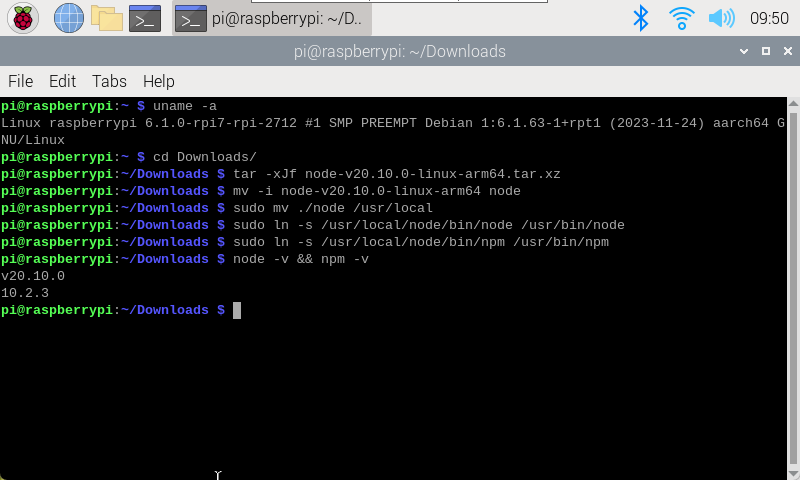
- View the architecture of Raspberry Pi
uname -a

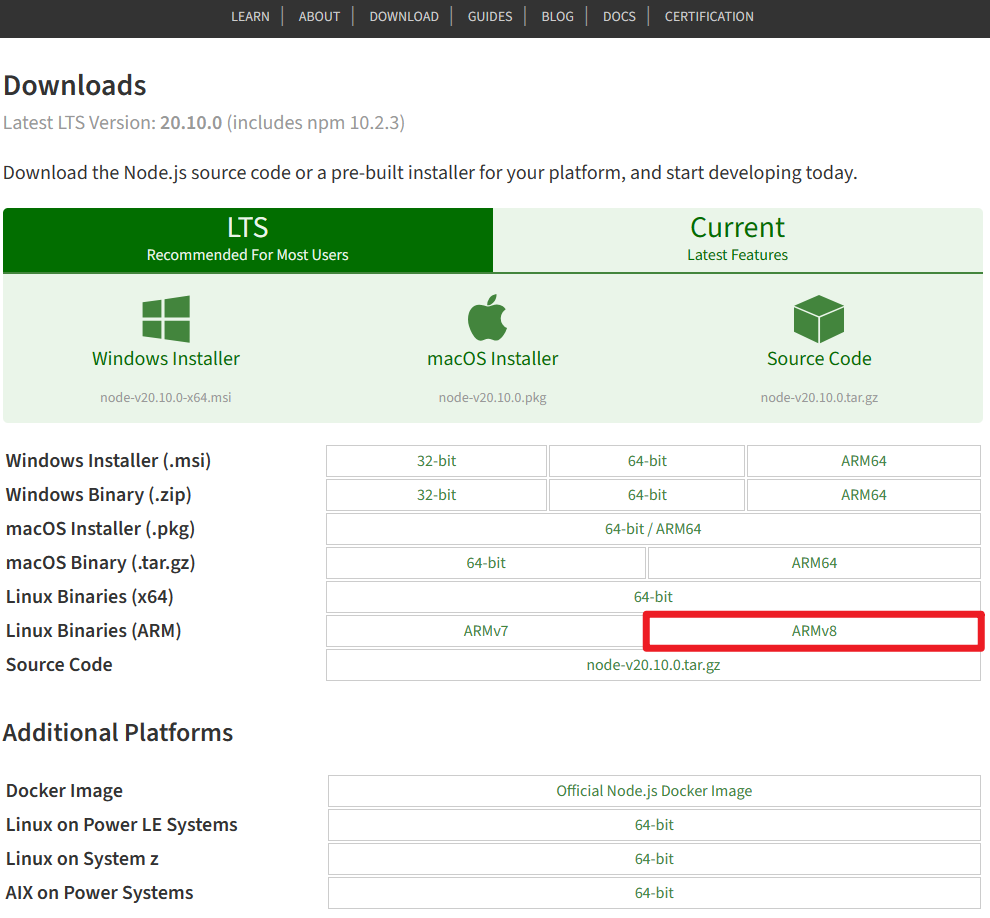
Select the Node.js version suitable for ARMv8 architecture to install
- Node.js download
xxxxxxxxxxhttps://nodejs.org/en/download/
- Unzip
Download the latest version of the binary file from the official website, unzip it, and name the folder the node folder:
xxxxxxxxxxcd Downloads/tar -xJf node-v20.10.0-linux-arm64.tar.xzmv -i node-v20.10.0-linux-arm64 node

- Move binaries and add soft links
xxxxxxxxxxsudo mv ./node /usr/localsudo ln -s /usr/local/node/bin/node /usr/bin/nodesudo ln -s /usr/local/node/bin/npm /usr/bin/npm
- Check whether node and npm are installed successfully
xxxxxxxxxxnode -v && npm -v
2. Enable plug-in
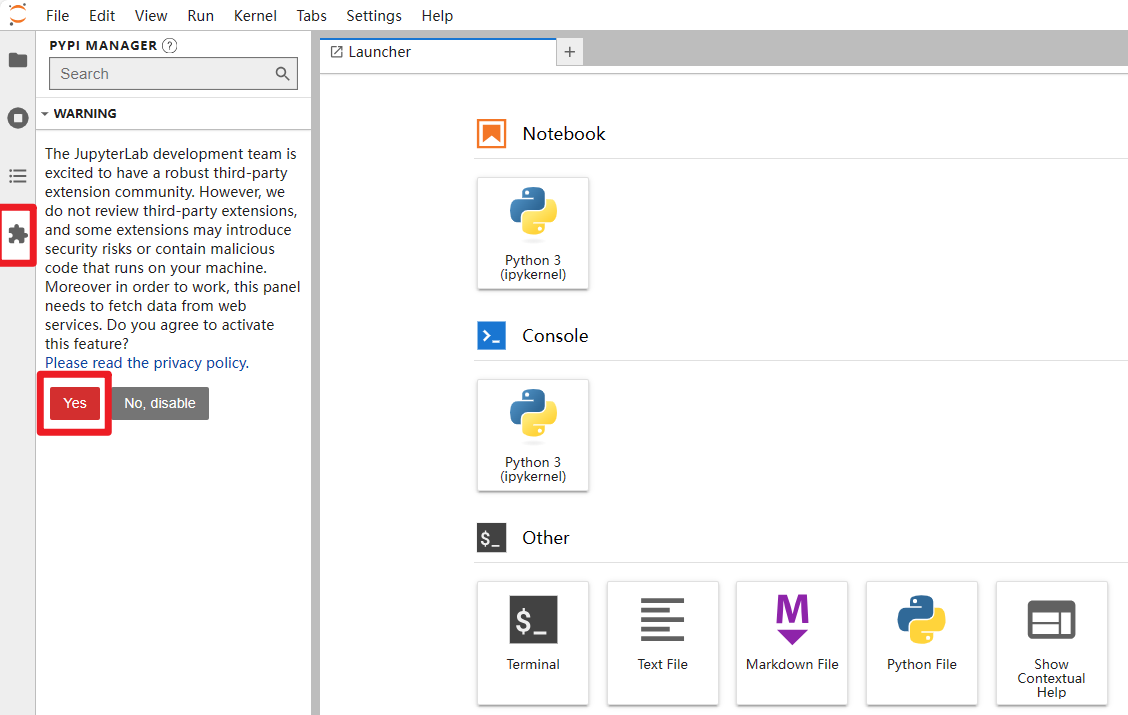
Enable third-party expansion support in jupyter lab.
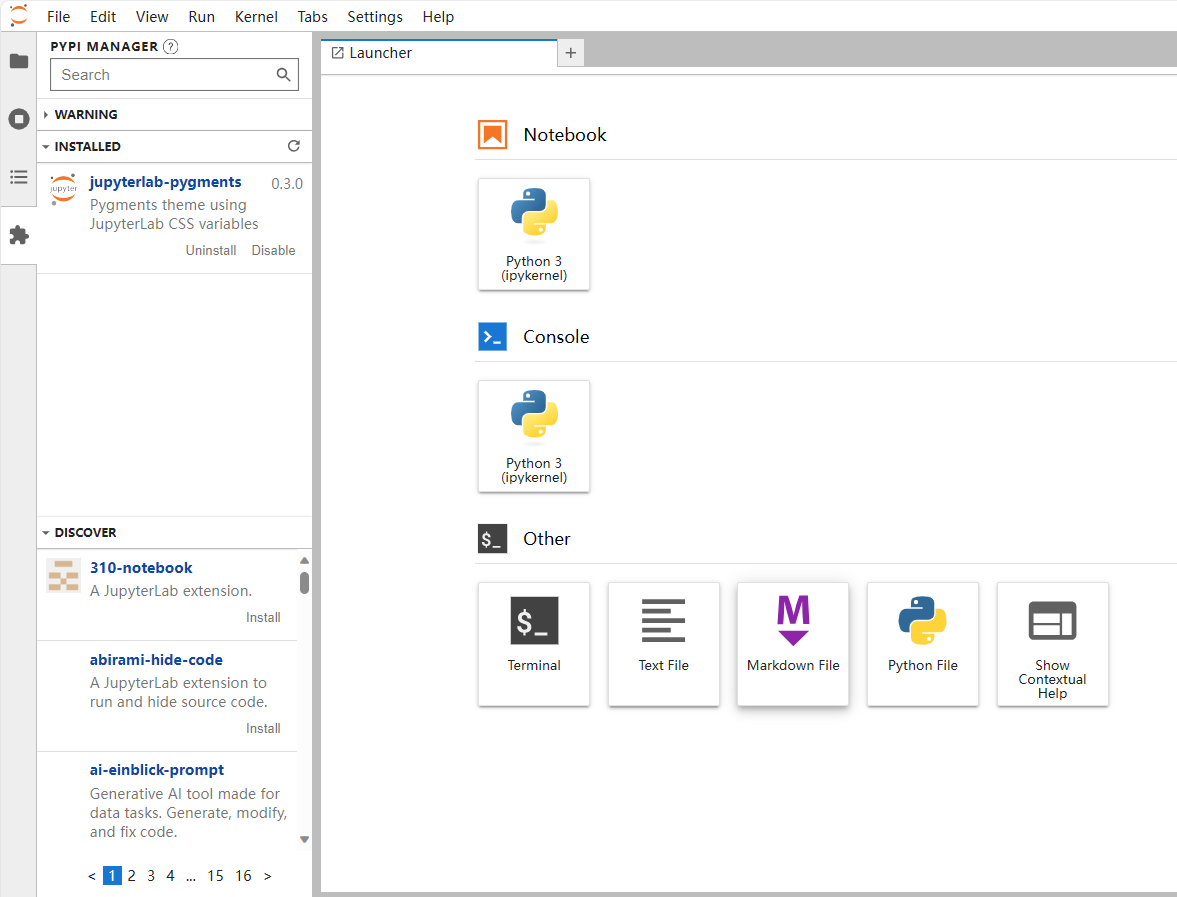
3. Install the expansion pack
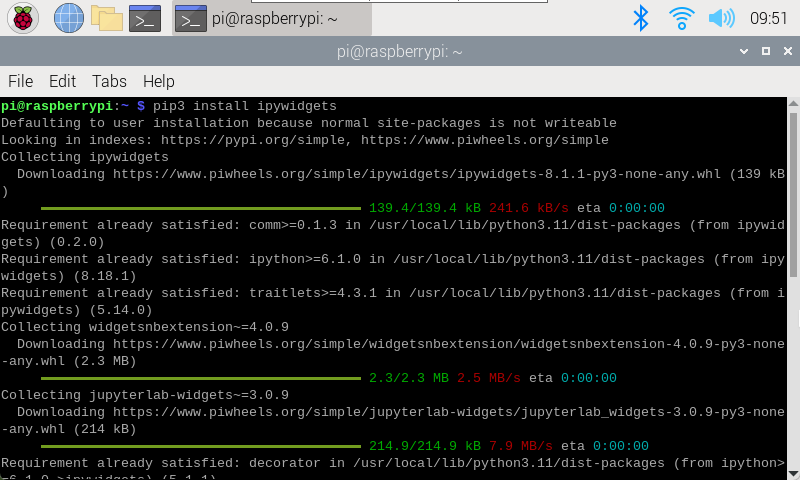
xxxxxxxxxxpip3 install ipywidgets
Provides functionality for creating interactive widgets in Jupyter Lab.
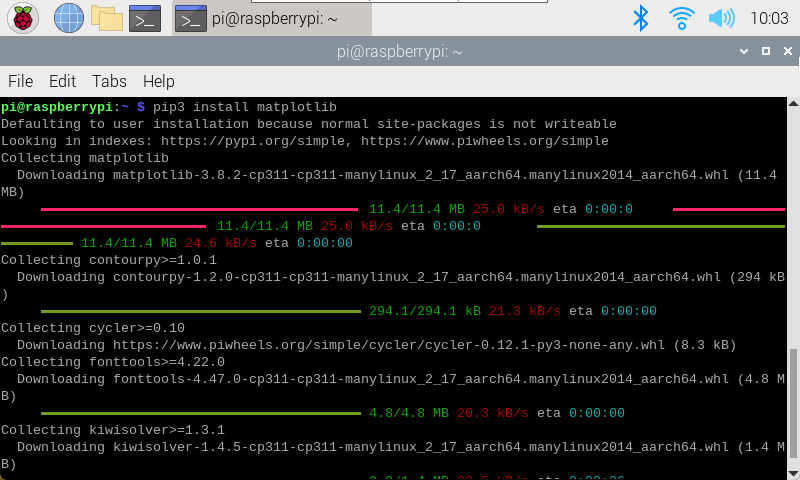
xxxxxxxxxxpip3 install matplotlib
Features for creating various types of graphs and visualizations in Python, including line plots, scatter plots, histograms, and more.