Welcome to L-Type Motor repository
3. 520 motor introduction and usage
520 Motor Introduction and Usage
This article is used to explain the motor parameters, recommended supply voltage, and the recommended wiring method for this motor to be connected to the four-way motor driver board.
520 motor
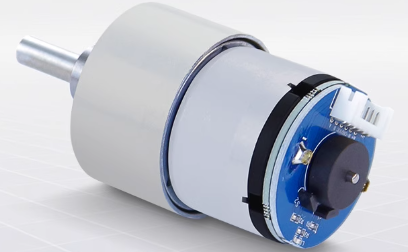
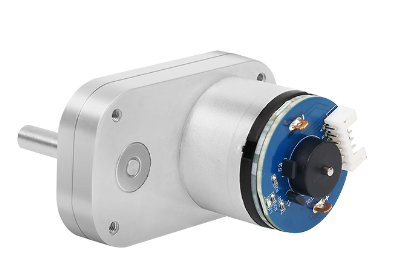
| Parameters | MD520Z19_12V | MD520Z30_12V | MD520Z56_12V | L-type 520 motor |
|---|---|---|---|---|
| Rated voltage | 12V | 12V | 12V | 12V |
| Motor type | Permanent magnet brush | Permanent magnet brush | Permanent magnet brush | Permanent magnet brush |
| Output shaft | 6mm diameter D-type eccentric shaft | 6mm diameter D-type eccentric shaft | 6mm diameter D-type eccentric shaft | 6mm diameter D-type eccentric shaft |
| Stall torque | 3.1kg·cm | 4.8kg·cm | 8.3kg·cm | 10kg·cm |
| Rated torque | 2.2kg·cm | 3.3kg·cm | 6.5kg·cm | 4.4kg·cm |
| Speed before deceleration | 11000rpm | 11000rpm | 12000rpm | 12000rpm |
| Speed after deceleration | 550±10rpm | 333±10rpm | 205±10rpm | 300±5% |
| Rated power | ≤4W | ≤4W | ≤4W | ≤6W |
| Stall current | 3A | 3A | 4A | 4A |
| Rated current | 0.3A | 0.3A | 0.3A | 0.5A |
| Gear reduction ratio | 1:19 | 1:30 | 1:56 | 1:40 |
| Encoder type | AB phase incremental Hall encoder | AB phase incremental Hall encoder | AB phase incremental Hall encoder | AB phase incremental Hall encoder |
| Encoder supply voltage | 3.3-5V | 3.3-5V | 3.3-5V | 3.3-5V |
| Number of magnetic ring lines | 11 lines | 11 lines | 11 lines | 11 lines |
| Interface type | PH2.0 6Pin | PH2.0 6Pin | PH2.0 6Pin | PH2.0 6Pin |
| Function | With pull-up shaping, the microcontroller can directly read the signal pulse | With pull-up shaping, the microcontroller can directly read the signal pulse | With pull-up shaping, the microcontroller can directly read the signal pulse | With built-in pull-up shaping, the microcontroller can directly read the signal pulse |
| Weight of single motor | 150g±1g | 150g±1g | 150g±1g | 161g±1g |
Recommended power supply: 12V. There are four types of 520 motors, and their rated voltage is 12V. When we drive the 520 motor, we can connect a voltage between 11 and 16V, and it is recommended to use a 12V voltage supply.
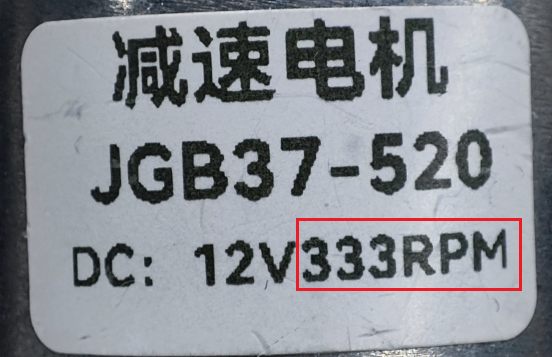
If you want to distinguish the model of the 520 motor you bought, you can directly look at the label printed on the 520 motor. There is a text of RPM printed on it, and the number in front of RPM corresponds to the number of speed after deceleration in the parameter table.
For example, the label of the 520 motor in my hand says 333RPM, so I should pay attention to the parameters in the MD520Z30_12V column. Especially the two parameters of reduction ratio and number of magnetic ring lines, which may be modified when using the four-way motor driver board.
Recommended wiring: The purchased 520 motor will come with two types of wires. Here we recommend that you choose the black PH2.0-6PIN double-head reverse cable, one end connected to the motor, and the other end directly connected to the PH2.0-6PIN encoder motor interface on the four-way motor driver board. This wiring is the most convenient, but it can be found that the A on the motor corresponds to the B phase of the four-way motor driver board. Therefore, when configuring the motor type on the four-way motor driver board, you should choose $mtype:1#, the model of the 520 motor.
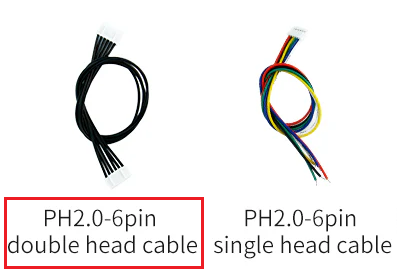
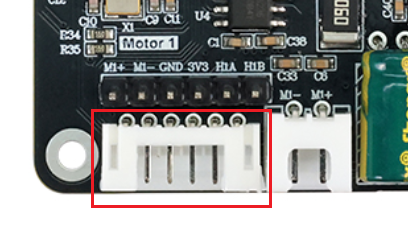
520 motor wiring instructions:
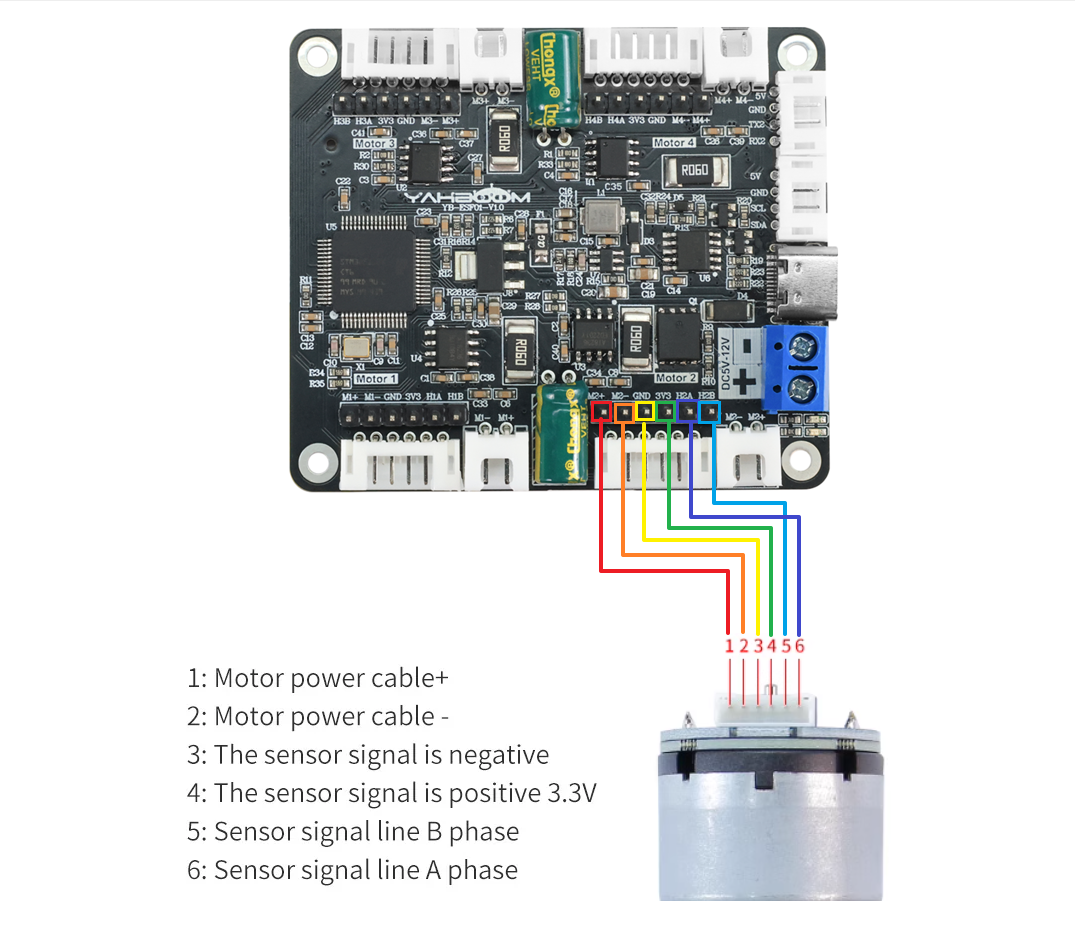
If you use PH2.0-6PIN to Dupont line connection, you can connect according to the picture below. With this connection, the motor phase A will be connected to the four-way motor driver board phase A, and phase B will be connected to phase B. However, when configuring the motor type, you should select $mtype:2#, the model of the 310 motor.