yahboom
HomeLearn
Solution
Blog
Online Store
About Us
EN/中文
Jetson ORIN NANO SUPER📖
01.Get started
  • 01. Learning route
  • 02. Get started quickly
  • 03. System Update Notesnew
  • 04. Disable automatic updates and troubleshooting issues
  • 05. Notes on Jetson Orin Nano Official Kitnew
02.Jetson basic course
  • 01.Jetson board introduction
  • 02.Write Jetson original system
  • 03.Installing Jetson environment
  • 04.Backup SSD system
  • 05.Restore initial image system
  • 06.Write SUPER original system(optional)
  • 07.Write SUPER boot (optional)
  • 08. SSD expansion
  • 09.Jetpack old system upgraded to Yahboom SUPER factory system
  • 10.Write the system onto your own solid-state drive
03.Basic setting course
  • 01.Basic knowledge
  • 02.Network configuration
  • 03.SSH remote login
  • 04.VNC remote control
  • 05.Remote file transfer
  • 06.Jtop tool
  • 07.Exchange space expansion
  • 08.Use VSCode
  • 09.Use VMware
04.GPIO control course
  • 01.GPIO description
  • 02.GPIO library installation
  • 03.GPIO reading
  • 04.GPIO output
  • 05.Serial communication
  • 06.I2C communication
05.Vision basic course
  • 01.CSI camera preview
  • 02.USB camera preview
  • 03.Use Jupyter Lab
  • 04.Use JetCam
06.OpenCV basic course
  • 01.Image reading
  • 02.Image saving
  • 03.Image modification
  • 04.Image scaling
  • 05.Image cropping
  • 06.Image translation
  • 07.Image mirroring
  • 08.Image grayscale conversion
  • 09.Image binarization
  • 10.Image edge detection
  • 11.Add line segments
  • 12.Add rectangles
  • 13.Add circular shape
  • 14.Add ellipses
  • 15.Add polygons
  • 16.Add Text
  • 17.Preview USB camera image
  • 18.Preview CSI camera image
07.Vision advanced course
01.Environment construction
  • 01.TensorFlow
  • 02.PyTorch
  • 03.Torchvision
02.DeepStream development
  • 01.DeepStream environment
  • 02.Four types of detection(traffic)
03.YOLO11 development
  • 01.YOLO environment construction
  • 02.CLI use
  • 03.Object detection
  • 04.Instance segmentation
  • 05.Pose estimation
  • 06.Image classification
  • 07.Oriented object detection
  • 08.Model conversion
  • 09.Dataset annotation
  • 10.Model training conversion
  • 11.Model prediction
04.Mediapipe development
  • 01.Mediapipe environment
  • 02.Hand detection
  • 03.Face detection
  • 04.Face effects
  • 05.3D object recognition
  • 06.Virtual brush
  • 07.Gesture recognition
  • 08.Finger control
  • 09.Posture estimation
  • 10.Face mask
  • 11.Overall detection
  • 12.Green scene removal(Human)
05.QR code recognition
  • QR code recognition
06.YOLO26 development
  • 01.YOLO environment constructionnew
  • 02.CLI usenew
  • 03.Object detectionnew
  • 04.Instance segmentationnew
  • 05.Pose estimationnew
  • 06.Image classificationnew
  • 07.Oriented object detectionnew
  • 08.Model conversionnew
  • 09.Dataset annotationnew
  • 10.Model training conversionnew
  • 11.Model predictionnew
08.Docker basic course
  • 01.Docker introduction
  • 02.Docker installation
  • 03.Docker command
  • 04.Docker usage
  • 05.Docker interaction
09.ROS1-Melodic
01.ROS1 basic course
  • 01. Introduction to ROS
  • 02. Project file structure
  • 03. Common commands and tools
  • 04. Publisher
  • 05. Subscribers
  • 06. Customize topic messages and use
  • 07. Client
  • 08. Server
  • 09. Customize service messages and usage
  • 10. TF release and monitoring
02.ROS1 vision course
  • 00.Must read before running
  • 01.Camera preview
  • 02.QR code
  • 03.Human posture estimation
  • 04.Target detection
  • 05.AR vision
  • 06.Opencv application
  • 07.ROS+Opencv basics
  • 08.Mediapipe development
10.ROS2-Humble
01.ROS2 basic course
  • 01.Introduction to ROS2
  • 02.ROS2 install Humble
  • 03.ROS2 development environment
  • 04.ROS2 workspace
  • 05.ROS2 function package
  • 06.ROS2 node
  • 07.ROS2 topic communication
  • 08.ROS2 service communication
  • 09.ROS2 action communication
  • 10.ROS2 custom interface message
  • 11.ROS2 parameter service case
  • 12.ROS2 meta-function package
  • 13.ROS2 distributed communication
  • 14.ROS2 DDS
  • 15.ROS2 time related API
  • 16.ROS2 common command tools
  • 17.ROS2 rviz2 use
  • 18.ROS2 rqt toolbox
  • 19.ROS2 Launch startup file configuration
  • 20.ROS2 recording and playback tool
  • 21.ROS2 URDF model
  • 22.ROS2 Gazebo simulation platform
  • 23.ROS2 TF2 coordinate transformation
02.ROS2 vision course
  • 01.Camera preview (USB)
  • 02.Camera preview (CSI)
  • 03.Camera calibration (USB)
  • 04.Camera calibration (CSI)
  • 05.AR vision (USB)
  • 06.AR vision (CSI)
11.Offline AI model coursenew
Offline large model (Text Interaction)
  • 1.AI large model environment deployment
  • 2.Install large model dialogue platform
  • 3.Meta Al Llama3.2 model
  • 4.Alibaba Cloud Qwen3 model
  • 5.Microsoft Phi-4-mini model
  • 6.DeepSeek DeepSeek-R1 model
  • 7.Alibaba Cloud Qwen2.5v visual multimodal large model
  • 8.Google Gemma3 visual multimodal large model
  • 9.Lava visual multimodal large model
  • 10.MiniCPM-V visual multimodal large model
  • 11.Multimodal visual understand application
  • 12.Multimodal text image application
  • 13.Multimodal video analysis application
  • 14.Multi module visual position application
  • 15.Multimodal table scanning application
  • 16.Multimodal autonomous agent application
Offline large model (Voice Interaction)
  • 0.Voice interaction hardware connection (ReadMe)
  • 1.Offline speech to text (ASR)
  • 2.Offline text to speech (TTS)
  • 3.AI large model voice interaction
  • 4.Multimodal visual understand speech interaction
  • 5.Multimodal text and graphics application
  • 6.Multimodal video analysis application
  • 7.Multi module visual position application
  • 8.Multimodal table scanning application
  • 9.Multimodal autonomous proxy application
  • 10.AI large model offline voice assistant
12.Online AI model coursenew
Online large model (Text Interaction)
  • 1.OpenRouter large model API aggregation platform
  • 2.Multimodal visual understand application
  • 3.Multimodal visual localization application
  • 4.Multimodal table scanning application
  • 5.Multimodal autonomous proxy application
Online large model (Voice Interaction)
  • 0.Voice interaction hardware connection (ReadMe)
  • 1.Online speech to text (ASR)
  • 2.Online text to speech (TTS)
  • 3.AI large model voice interaction
  • 4.Multimodal visual understand speech interaction
  • 5.Multi module visual position application
  • 6.Multimodal table scanning application
  • 7.Multimodal autonomous proxy application
  • 8.AI large model online voice assistant
13.NVIDIA lsaac ROS coursenew
  • 1.Build lsaac ROS environment
  • 2.Deep segmentation
  • 3.DNN stereoscopic depth
  • 4.Free space segmentation
  • 5.Image distortion processing
  • 6.Image segmentation
  • 7.3D scene reconstruction and mapping
  • 8.Object detection
  • 9.3D attitude estimation
  • 10.Visual SLAM
14.OpenClaw Deployment and Basic Usagenew
  • 01.OpenClaw Quick Start on Jetson Platform
  • 02.OpenClaw Deployment
  • 03.OpenClaw WhatsApp Plugin Application
  • 04.OpenClaw WebChat Interaction
  • 05.OpenClaw TUI Interaction
  • 06.OpenClaw Tools Introduction
  • 07.OpenClawGate Gateway User Manual
  • 08.OpenClaw Features Overview
  • 09.OpenClawHub Introduction (Skill Installation)
  • 10.OpenClaw Application - File Management
  • 11.OpenClaw Application - Camera
  • 12.OpenClaw Application - Browser Control
  • 13.OpenClaw Application - Script Execution
  • 14.OpenClaw Application - AI Programming (Peripheral & GPIO Control)
  • 15.OpenClaw Application - Dedicated AI Assistant
  • 16.OpenClaw Web Search Capability Configuration
15.OpenClaw Advanced Developmentnew
1.Preparation Before Use
  • 01. Peripheral Hardware Configuration
  • 02. OpenClaw API-KEY Configuration
  • 03. OpenClaw Model Switching
  • 04. OpenClaw Prompts
  • 05. AI Voice Interaction Configuration
  • 06. Three Dialogue Configuration Tests
2.OpenClaw AI Programming Peripheral Control
  • 1. Servo Control
  • 2. RGB Strip
  • 3. OLED Display
  • 4. Temperature and Humidity Sensor
  • 5. Camera Application
  • 6. AI Script Peripheral Control
3.OpenClaw Peripheral Integration Applications
  • 1. Plant Care Assistant
  • 2. AI Calorie Estimation
  • 3. AI Rock Paper Scissors Game
  • 4. AI Pet
  • 5. AI Weather Station
  • 6. Temperature and Humidity Dashboard
  • 7. Scheduled Tasks
Download
  • System_File
  • VM_File
  • 3D_Model_File
  • DataSheet_File
  • Software_Tools
  • Code
  • Instruction_Manual
  • ROS2_Basic_VM
Download ZIP

Welcome to Jetson ORIN NANO SUPER repository

当製品の日本語版マニュアル資料は、こちらからご取得ください。

2. AI Calorie Estimation

OpenClaw AI Diet Calorie Estimation Tutorial

Before starting, please complete the [01-Hardware Configuration], [02-openclaw API-KEY Configuration], [03-openclaw Model Switching], [04-AI Voice Interaction Configuration], [05-Three Dialogue Solution Configuration Tests] under the Prerequisites directory. If you are currently only using TUI / whatsapp, you can skip 04 for now. This article assumes the basic environment has been prepared and only expands on the diet calorie estimation project itself.

1. Tutorial Objectives

This article demonstrates OpenClaw's natural language capabilities in diet analysis scenarios through "photo recognition + large model estimation".

  • Understand how to use cameras and visual models for plate analysis

  • Communicate with OpenClaw through three methods: whatsapp, TUI, and voice code

  • Complete four project scenarios: plate photo, food recognition, calorie estimation, health advice

2. Hardware Preparation

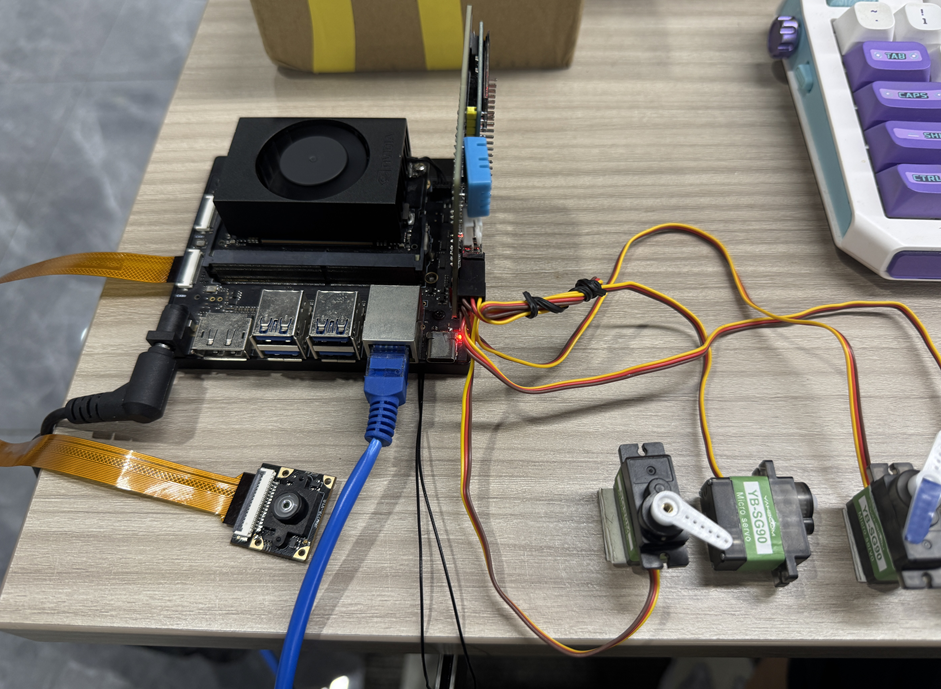
  • OpenClaw mainboard

  • CSI camera module

  • OLED display

  • [Optional] AI voice module + speaker

  • Wiring diagram

image-20260601100811338

3. Software Preparation

Code entry points that will be used in the tutorial

  • Camera photo command: /home/jetson/hardware_hal_demo/camera

  • Photo CLI: /home/jetson/hardware_hal_demo/cli/seewhat

  • Image output directory: /home/jetson/hardware_hal_demo/cli

  • Voice entry: /home/jetson/voice_to_openclaw/src/main.py

In this project, the real "calorie estimation" is mainly completed by large models, so it is recommended to ensure the following two pipelines are normal first:

  • Camera can complete photo capture

  • Visual model can complete image description

Note: Calorie estimation is more suitable as a demonstration and daily reference, not suitable as medical-grade or nutritionist-level precise measurement results.

4. Test Project Basic Capabilities

Before starting this project, please complete one openclaw tui basic dialogue self-check; if you haven't done it yet, see [05-Three Dialogue Solution Configuration Tests]. After passing, enter TUI to verify the basic capabilities in the project.

First enter OpenClaw TUI:

openclaw tui
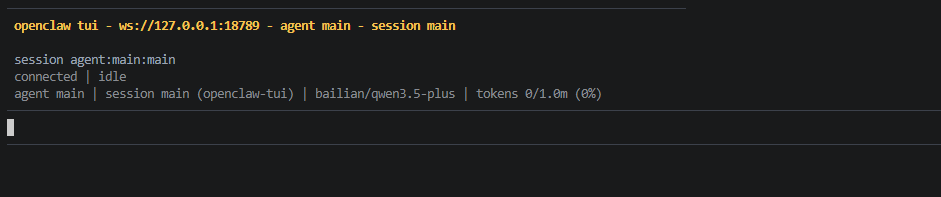
image-20260601100910431

Then you can first do the most basic photo and recognition test, for example:

  • Help me take a lunch photo

  • Look at what's on this plate

5. Three Solutions for Communicating with OpenClaw

SolutionSuitable ScenariosAdvantagesRecommended Positioning
whatsappRemote diet recording, classroom demonstrationsConvenient for remote viewing results after taking photosDemonstrate "visual + dialogue" capability
TUILocal debugging, model joint debuggingMost direct, easiest to verify analysis resultsFirst run through photo and description chain
Voice codeVoice Q&A, life assistant experienceCloser to daily usage methodAs complete demonstration solution

If optional AI voice module + speaker are selected, whatsapp dialogue, tui, whatsapp dialogue need to broadcast OpenClaw's reply content. You can run the following program in terminal. AI voice module dialogue does not need to run repeatedly

  • Modify whether to enable broadcast parameter

xxxxxxxxxx
/home/jetson/voice_to_openclaw/.env
xxxxxxxxxx
ENABLE_TTS=true  #This parameter controls whether to broadcast. After modification and saving, run the following program in terminal
  • Terminal input

xxxxxxxxxx
cd ~/voice_to_openclaw
source .venv/bin/activate
python -m src.openclaw_session_tts

image-20260601100926546

5.1 whatsapp Solution

For whatsapp connection and robot creation steps, please directly refer to [05-Three Dialogue Solution Configuration Tests]. After creation, you can remotely initiate diet analysis in whatsapp, for example:

  • Take a photo to see current food, estimate the food calories. If it exceeds 1000 calories, light up red light, otherwise light up green light. Servo rotates to 90 degrees to indicate not recommended for consumption, 0 degrees indicates recommended for consumption
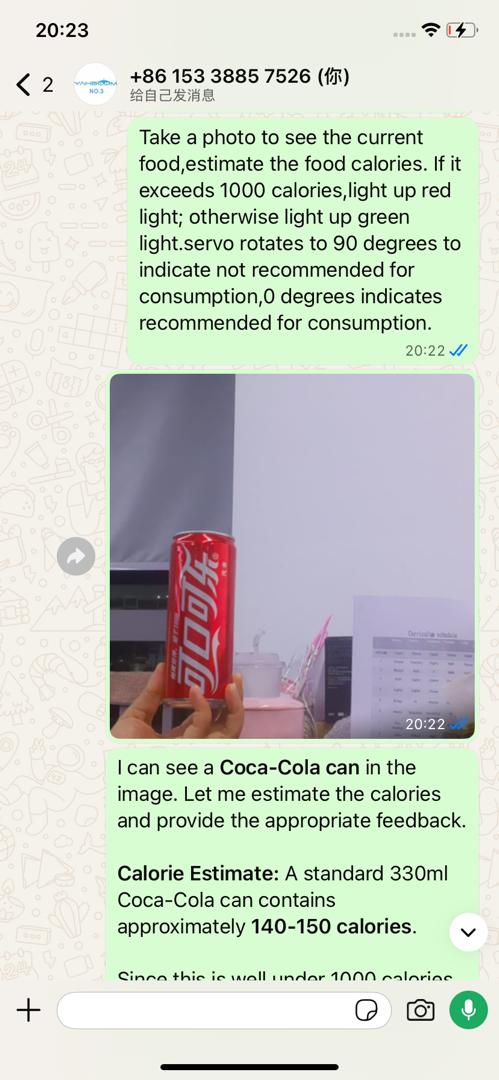
image-20260428161012934

5.2 TUI Solution

If you have completed the TUI self-check in Chapter 0, directly enter terminal text dialogue:

xxxxxxxxxx
openclaw tui

Then input project-related commands, for example:

  • Take a photo to see current food, estimate the food calories. If it exceeds 1000 calories, light up red light, otherwise light up green light. Servo rotates to 90 degrees to indicate not recommended for consumption, 0 degrees indicates recommended for consumption
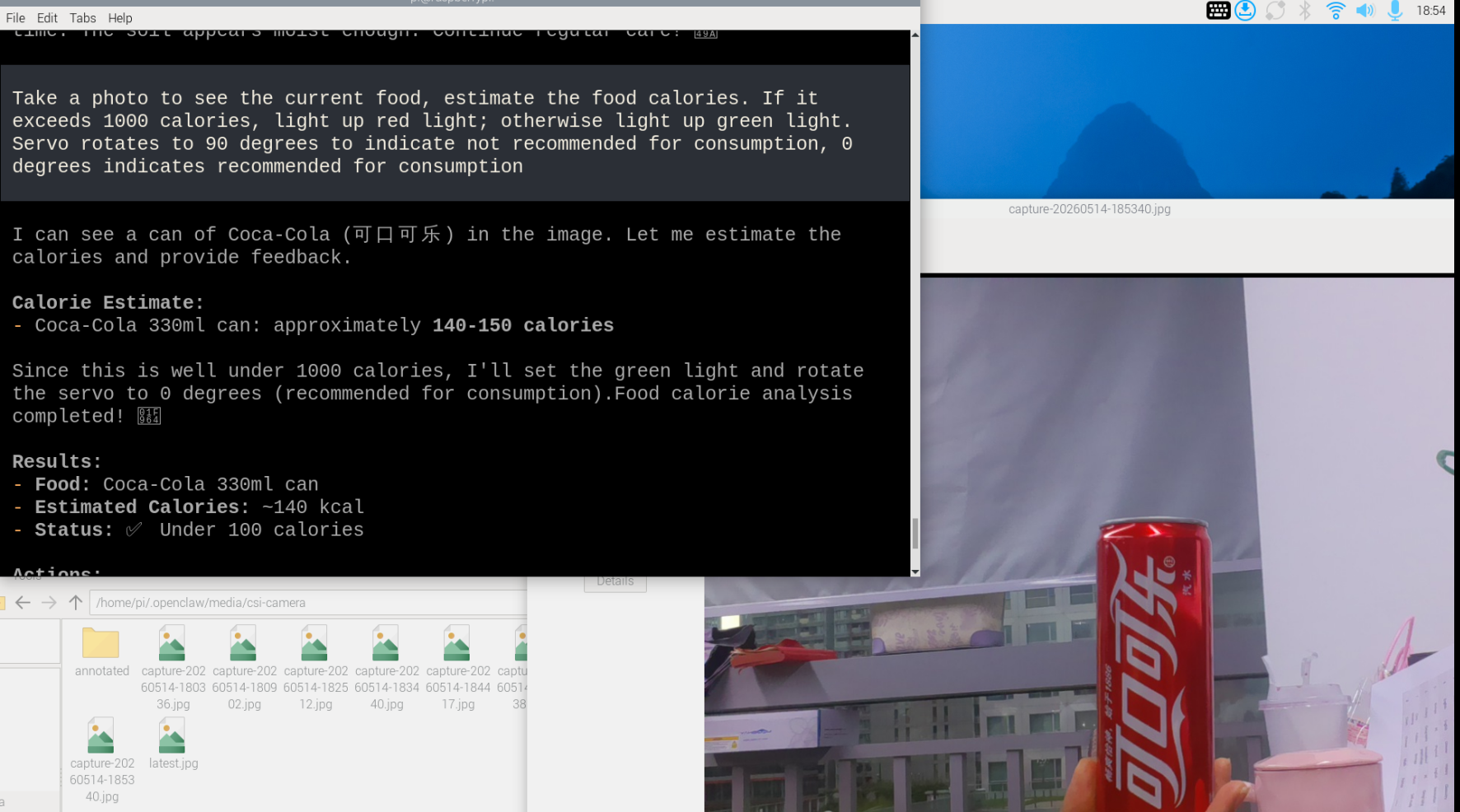
image-20260428161211918

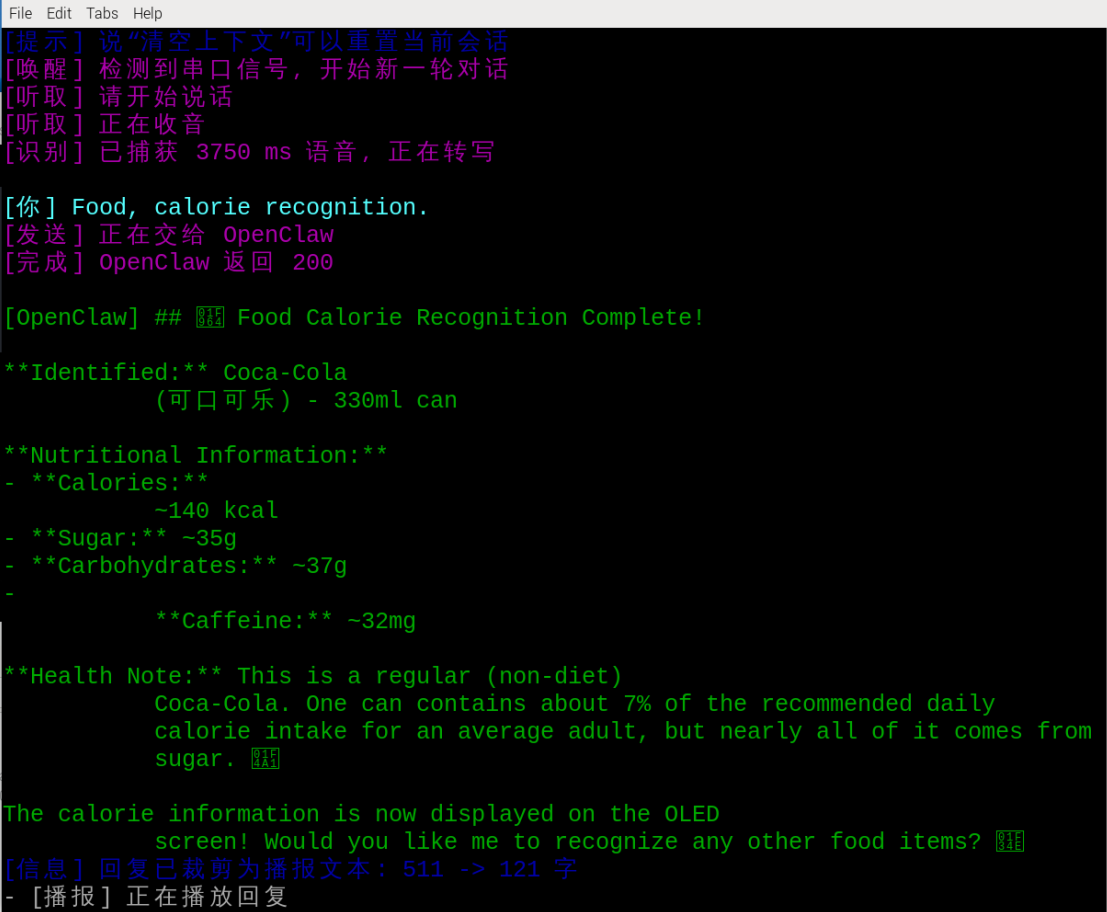
5.3 Voice Code Solution

xxxxxxxxxx
Requires optional AI voice interaction module + speaker

For voice module installation, environment configuration, and basic wake-up process, please directly refer to [04-AI Voice Interaction Configuration]. After waking up, you can directly say control content, for example:

  • Food calorie recognition

image-20260601101005178

6. Project Implementation

Note: The following are all dialogue demonstrations using openclaw tui method. You can also choose whatsapp or voice method to complete.

6.1 Scenario One: Plate Photo

Experimental Objective

First complete plate image capture to get an image available for subsequent analysis.

Effect Description

After successful photo capture, a plate image will be saved locally and generate a most recent image alias. Subsequent recognition and estimation will continue based on this image.

Example Instructions

  • Help me take a lunch photo

  • Take a plate photo now

6.2 Scenario Two: Food Recognition

Experimental Objective

Let OpenClaw recognize what main foods are on the plate.

Effect Description

The focus of this step is not immediately giving calories, but first recognizing main contents like rice, meat, vegetables, drinks, etc., laying the foundation for subsequent estimation.

Example Instructions

  • Look at what foods are in this meal

  • Help me recognize the plate contents

  • List the main ingredients

6.3 Scenario Three: Calorie Estimation

Experimental Objective

Based on recognized food content, let OpenClaw give an approximate calorie estimation.

Effect Description

OpenClaw can give total calories or itemized calories based on image content and common food experience values. This result is more suitable for demonstration and reference, not suitable as strict nutritional calculation.

Example Instructions

  • Estimate the total calories of this meal

  • Estimate itemized by rice, eggs, meat, and vegetables

  • How many calories is this lunch approximately

6.4 Scenario Four: Health Advice

Experimental Objective

Let OpenClaw give a brief suggestion after estimating calories.

Effect Description

Besides reporting numbers, OpenClaw can also give a suggestion closer to daily communication based on goals like "fat loss, muscle gain, light meal, late-night snack".

Example Instructions

  • If I'm losing weight, give me a suggestion

  • Is this meal combination balanced

  • Help me summarize the result into one sentence

Extensible Gameplay

  • Display total calories on OLED

  • Make into daily diet check-in assistant

  • Combine with voice broadcast to form life scenario demonstration

Plant Care Assistant
AI Rock Paper Scissors Game

COMPANY

  • About us
  • Team Style
  • Blog

LEARNING & EXPLORATION

  • Tutorials
  • Edge AI hardware
  • Educational robots
  • Embedded intelligent hardware

WHERE TO BUY

  • Yahboom Online Store
  • Amazon
  • Alibaba
  • AliExpress
  • Mercado

TECHNOLOGY SUPPORT

  • Email: support@yahboom.com

BE A DISTRIBUTOR

  • Email: sales@yahboom.com
QR Code

Copyright © 2017-2026 Yahboom. All Rights Reserved.

EN/中文