Welcome to DOGZILLA-Lite repository
7. Human Pose Estimation
Human pose estimation
1. Purpose of the experiment
Driving the robot dog to detect human posture
2. Experimental path source code
Enter the robot dog system, end the robot dog program, enter "ip (ip is the robot dog's ip): 8888" in the browser, enter the password "yahboom"
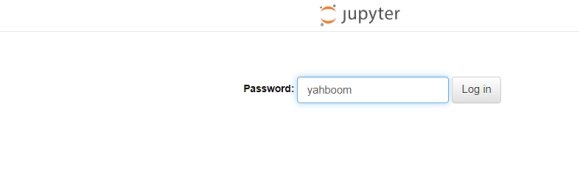
and log in. Enter the path of cd ~/DOGZILLA_Lite_class/5.AI Visual Recognition Course/07. Human pose estimation and run pose.ipynb . You can also enter the command in the terminal to directly start the python script
xxxxxxxxxxpython3 pose.py
3. Experimental Phenomenon
After running the source code, you can see that the robot dog can imitate human postures.
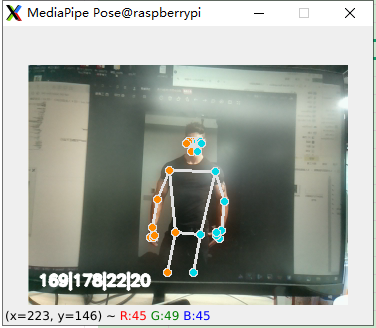
4. Main program source code
def main(): global h, w, start_time, status, height, quitmark flag = False if not cap.isOpened(): print("Camera not open") exit() tmp = f"a{sport['count']}\n" tmp = f"b{sport['calories']}\n" while not flag: ret, frame = cap.read() if not ret: print("Read Error") break frame = cv2.flip(frame, 1) rgbframe = cv2.cvtColor(frame, cv2.COLOR_BGR2RGB) poseoutput = poses.process(rgbframe) h, w, _ = frame.shape preview = frame.copy() if poseoutput.pose_landmarks: mpdraw.draw_landmarks( preview, poseoutput.pose_landmarks, mppose.POSE_CONNECTIONS ) knee_angles = get_knee_angle(poseoutput.pose_landmarks.landmark) body_ratio = get_body_ratio(poseoutput.pose_landmarks.landmark) avg_angle = (knee_angles[0] + knee_angles[1]) // 2 # determine the status if status: if avg_angle > 160: status = False pass_time = time.time() - start_time start_time = 0 if 3000 > pass_time > 3: sport["count"] = sport["count"] + 1 sport["calories"] = sport["calories"] + int(0.66 * pass_time) logger(sport["count"], sport["calories"]) tmp = f"a{sport['count']}\n" tmp = f"b{sport['calories']}\n" else: if avg_angle < 120 and body_ratio < 1.2: start_time = time.time() status = True height = int(115 - (180 - avg_angle) / 90 * 40) print(avg_angle, height) if status: cv2.putText( preview, f"{height} : {avg_angle:.1f} {body_ratio:.3f}", (10, 40), cv2.FONT_HERSHEY_SIMPLEX, 1, (0, 255, 0), 1, cv2.LINE_AA, ) else: cv2.putText( preview, f"{height} : {avg_angle:.1f} {body_ratio:.3f}", (10, 40), cv2.FONT_HERSHEY_SIMPLEX, 1, (0, 0, 255), 1, cv2.LINE_AA, ) else: start_time = 0 # car.reset() b, g, r = cv2.split(preview) image = cv2.merge((r, g, b)) # image = cv2.flip(image, 1) imgok = Image.fromarray(image) mydisplay.ShowImage(imgok) r, g, b = cv2.split(image) image1 = cv2.merge((b, g, r)) image_widget.value = bgr8_to_jpeg(image1) #cv2.imshow("image1",image1) if cv2.waitKey(5) & 0xFF == 27: break if button.press_b(): car.reset() breakThe source code turns on the camera, and then detects the human body's posture accordingly. The results are displayed on the robot dog screen and the computer screen.