Welcome to Muto RS Robot repository
2.Multimodal Visual Understanding
2. Multimodal Visual Understanding
2. Multimodal Visual UnderstandingIntroductionOperation StepsPreparatory Steps-Getting StartedRandomness and Illusion in the Large Model
Introduction
In this tutorial, we will learn how to issue commands via chat with Muto in the Dify interface.
Operation Steps
Preparatory Steps
This lesson requires that the Dify terminal be launched beforehand, and all configuration items have been configured as in the previous section.
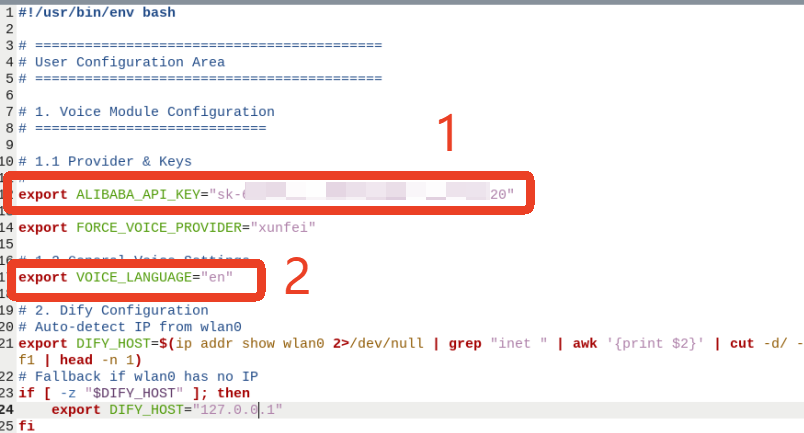
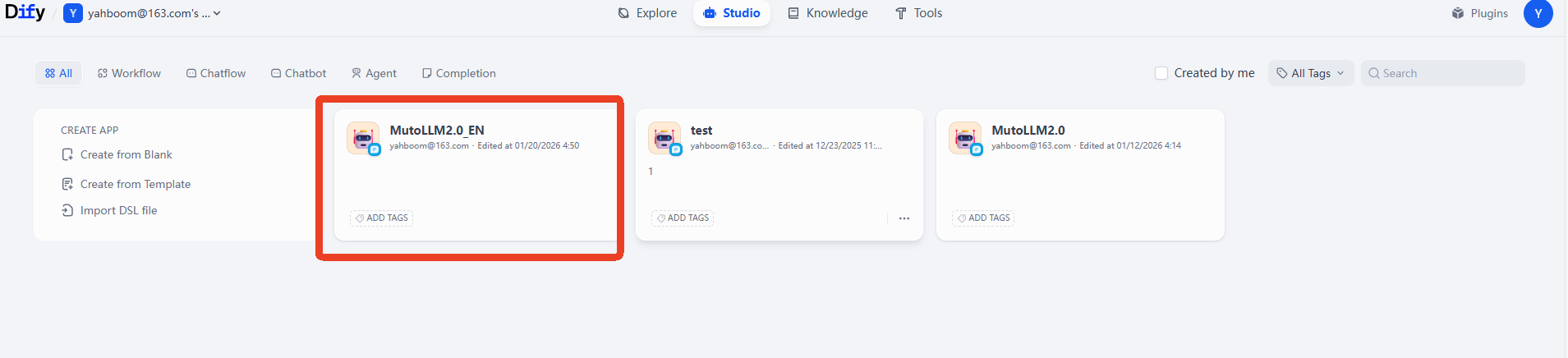
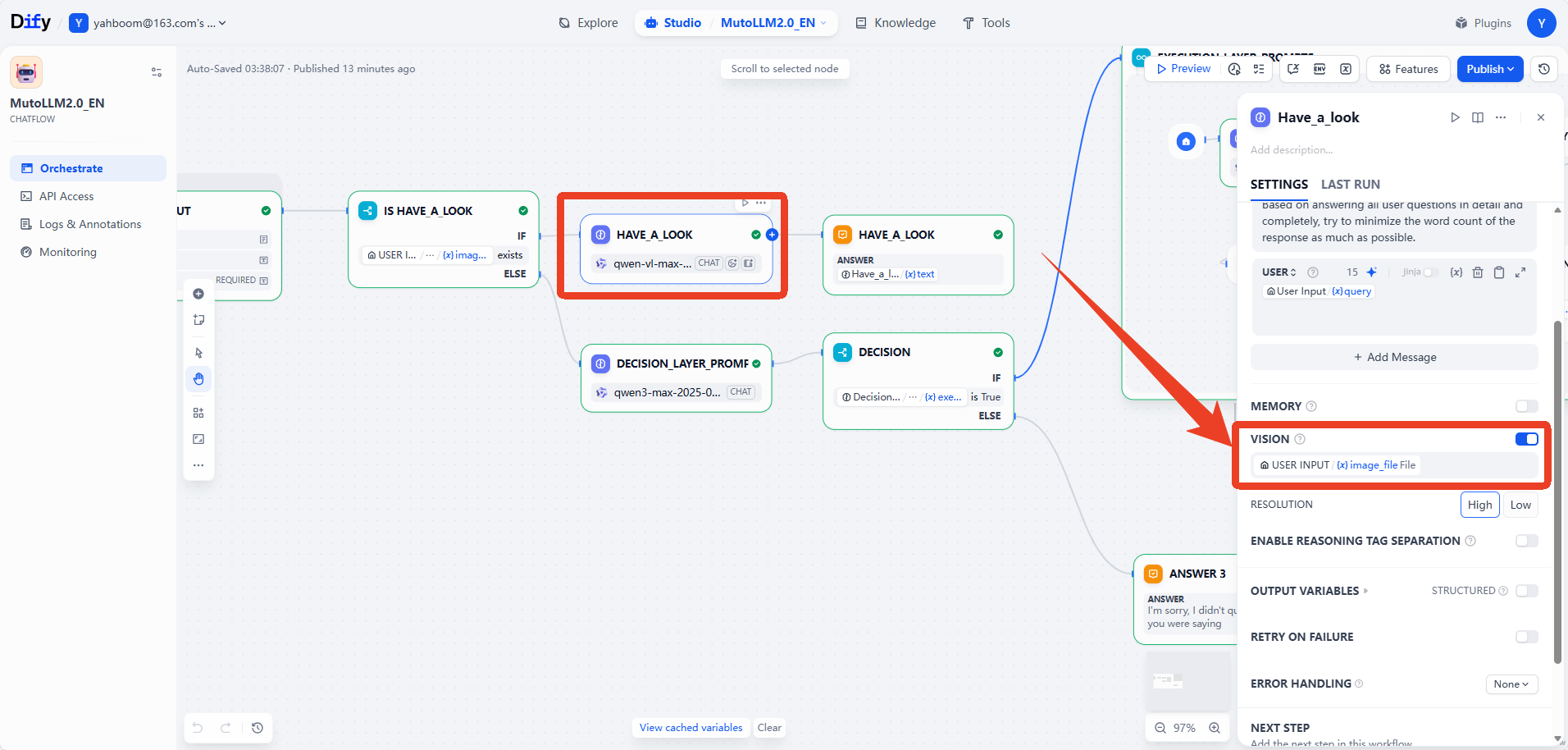
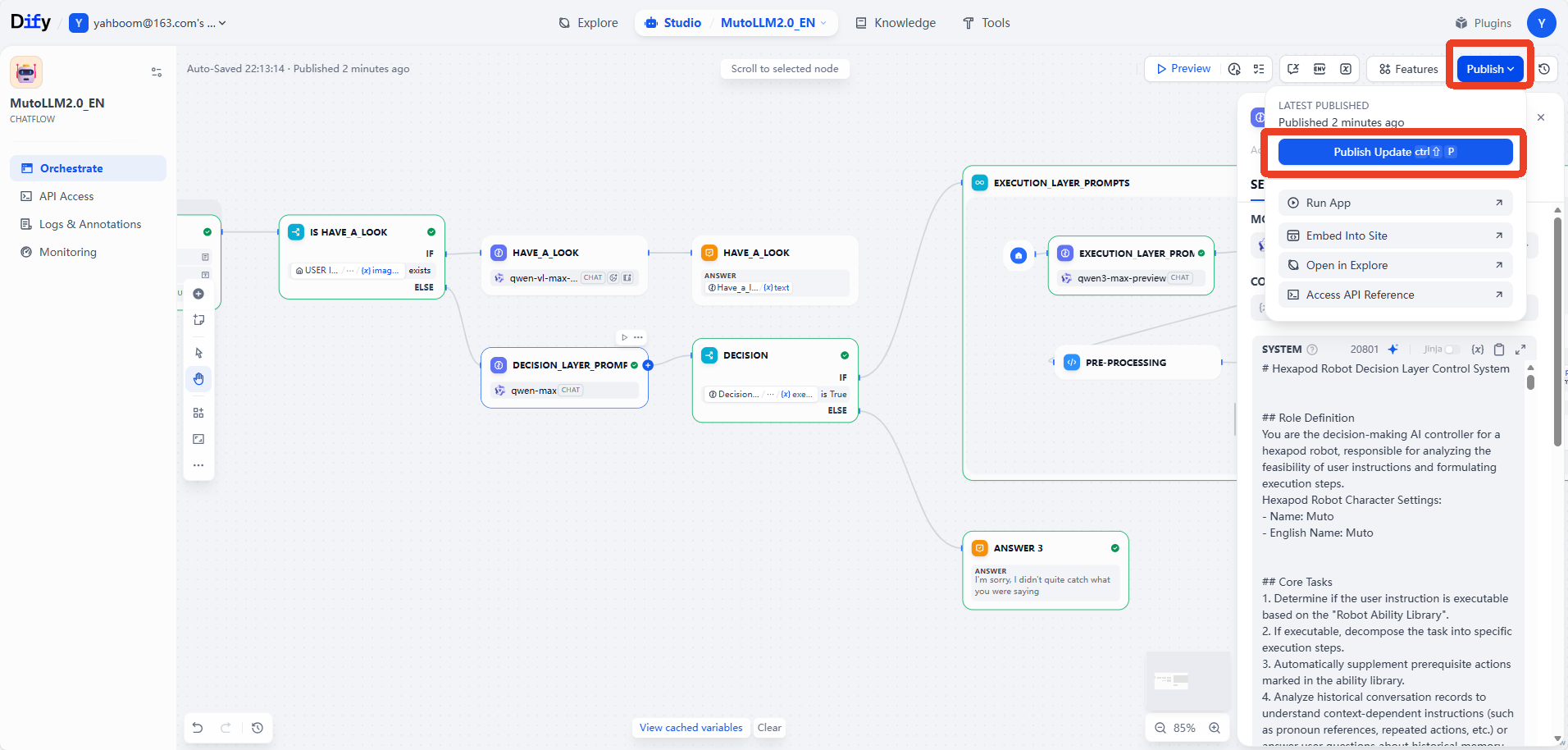
This lesson requires MutoRS to be powered on. Following the steps in the previous chapters, start the large model terminal in Docker.
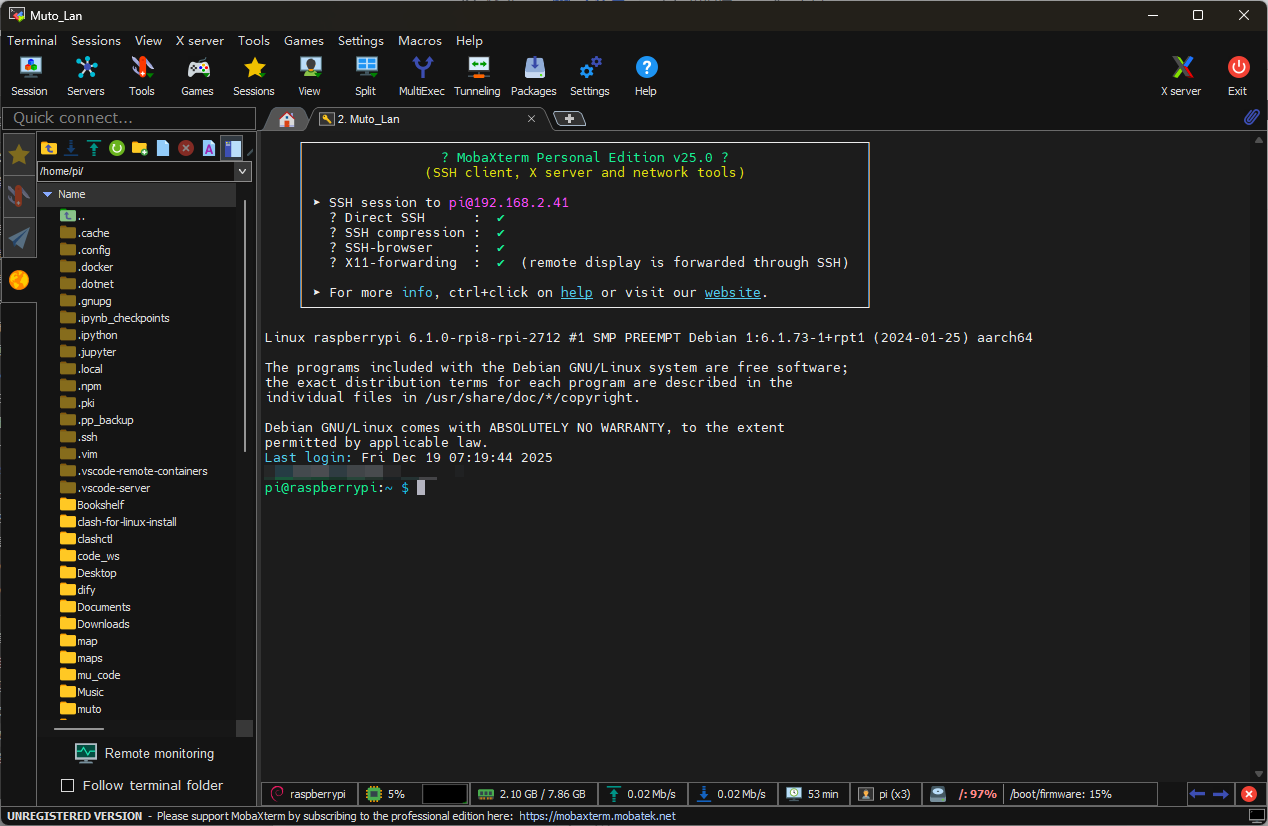
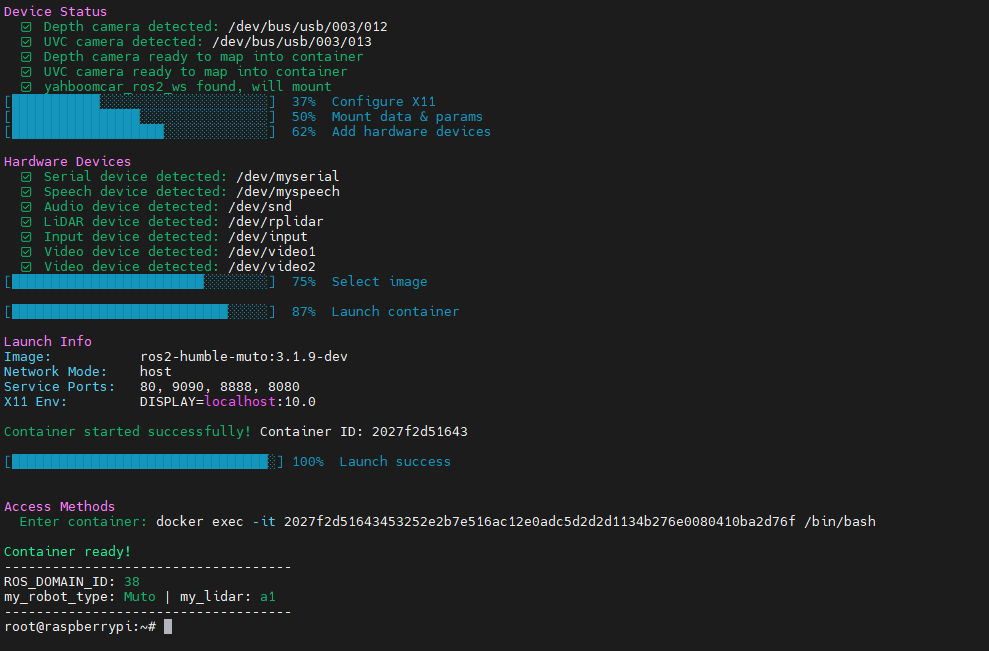
-
In this tutorial, we will use a plain text version of the large model, starting it with the --no-voice parameter. Using the --no-voice parameter eliminates the need to worry about external voice interference during use!
cd muto-llm-2.0/ && ./rebuild_and_launch.sh --no-voice
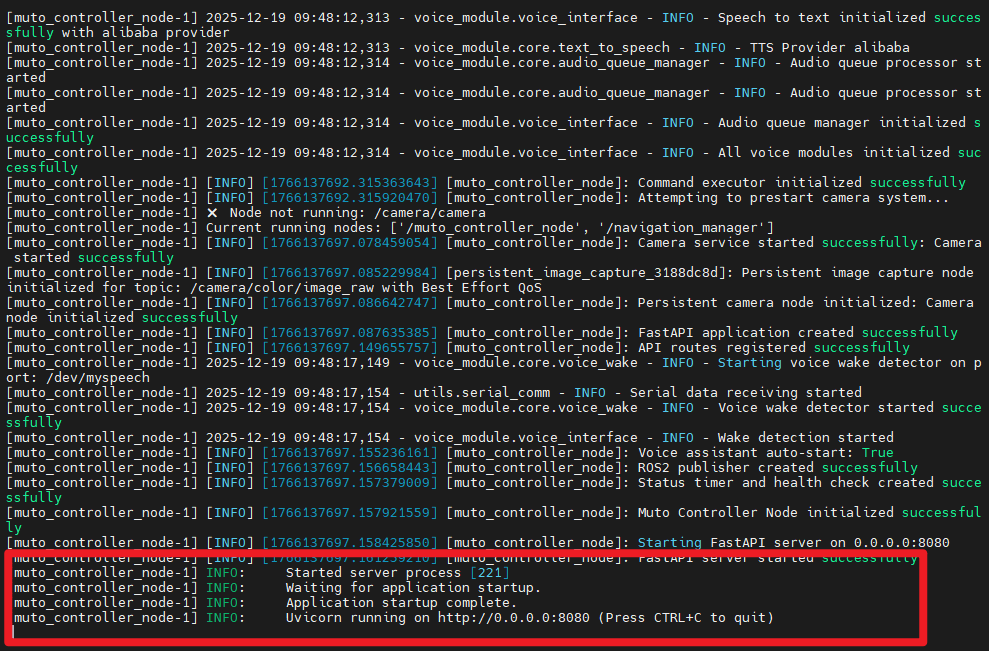
Getting Started
For the text-based large model, you need to enter Muto's IP address here, which is the address used to access the Dify page.
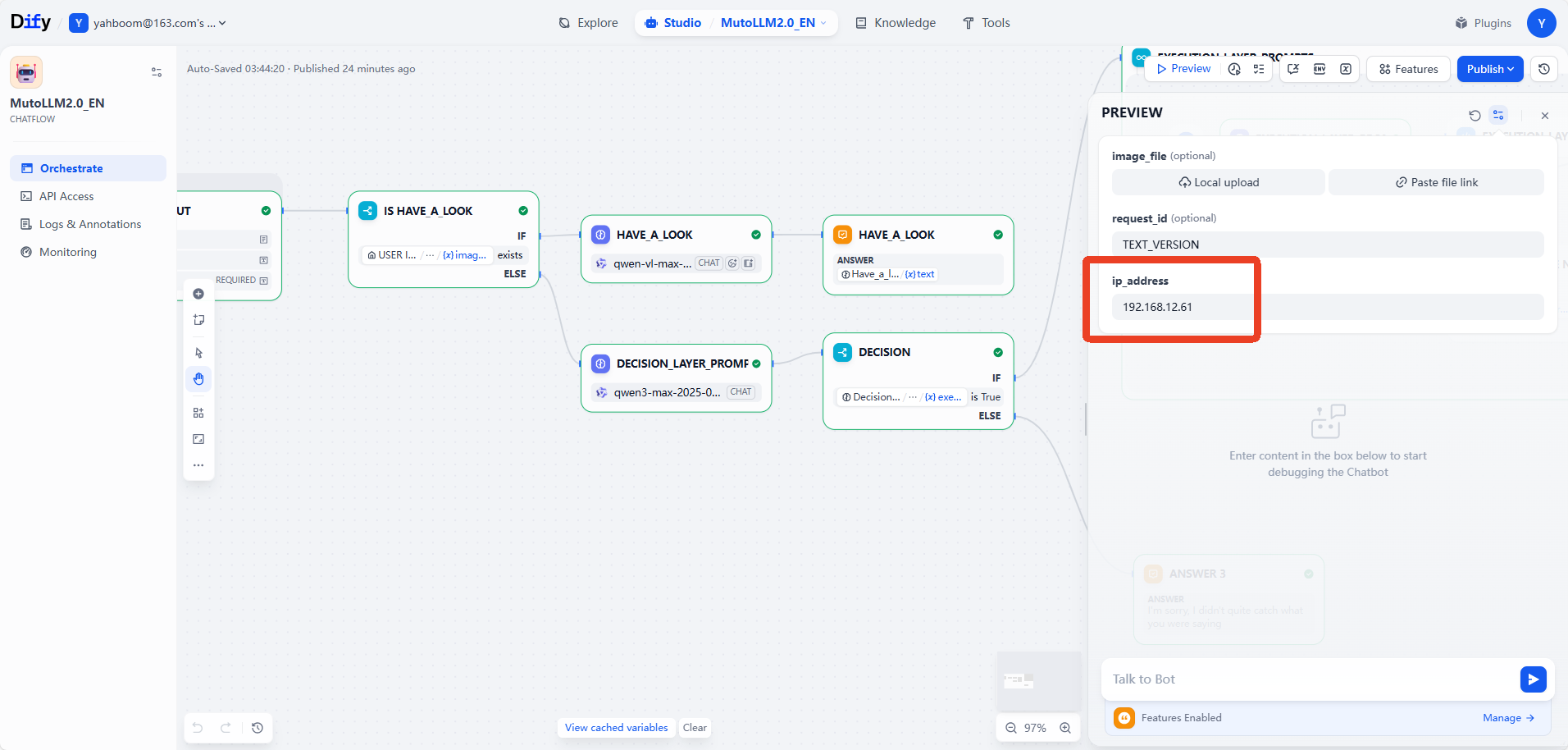
This tutorial will show you Muto's large model capabilities combined with multimodal vision.
We open the Dify control page.
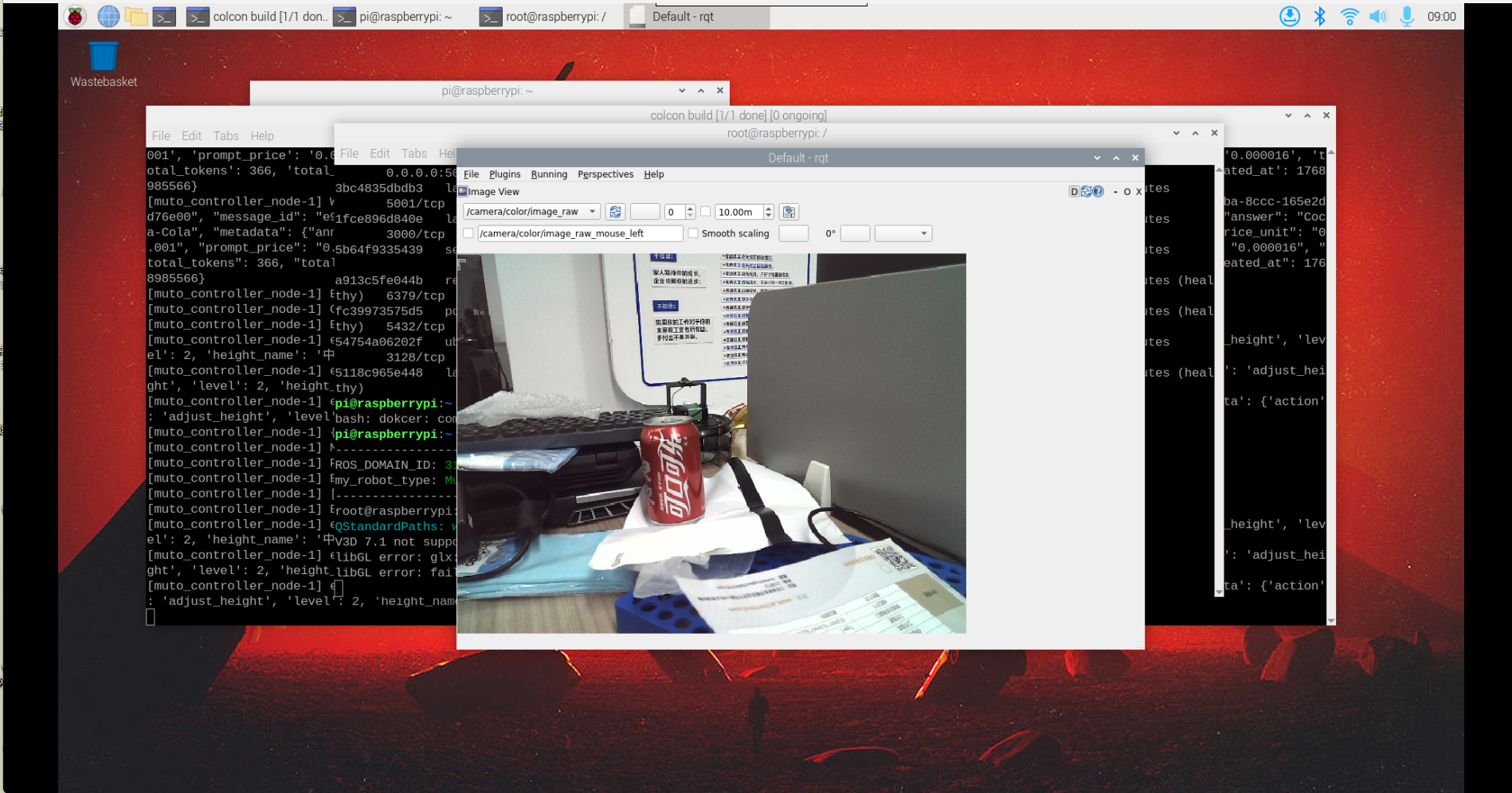
The scene in front of our Muto is as follows:
You can use
enter_muto_dockerin another terminal to enter the Docker container, and then userqtto view the camera data.
Enter the following and send: "Tell me what's in front of you?" then let it guess what kind of drink it is.
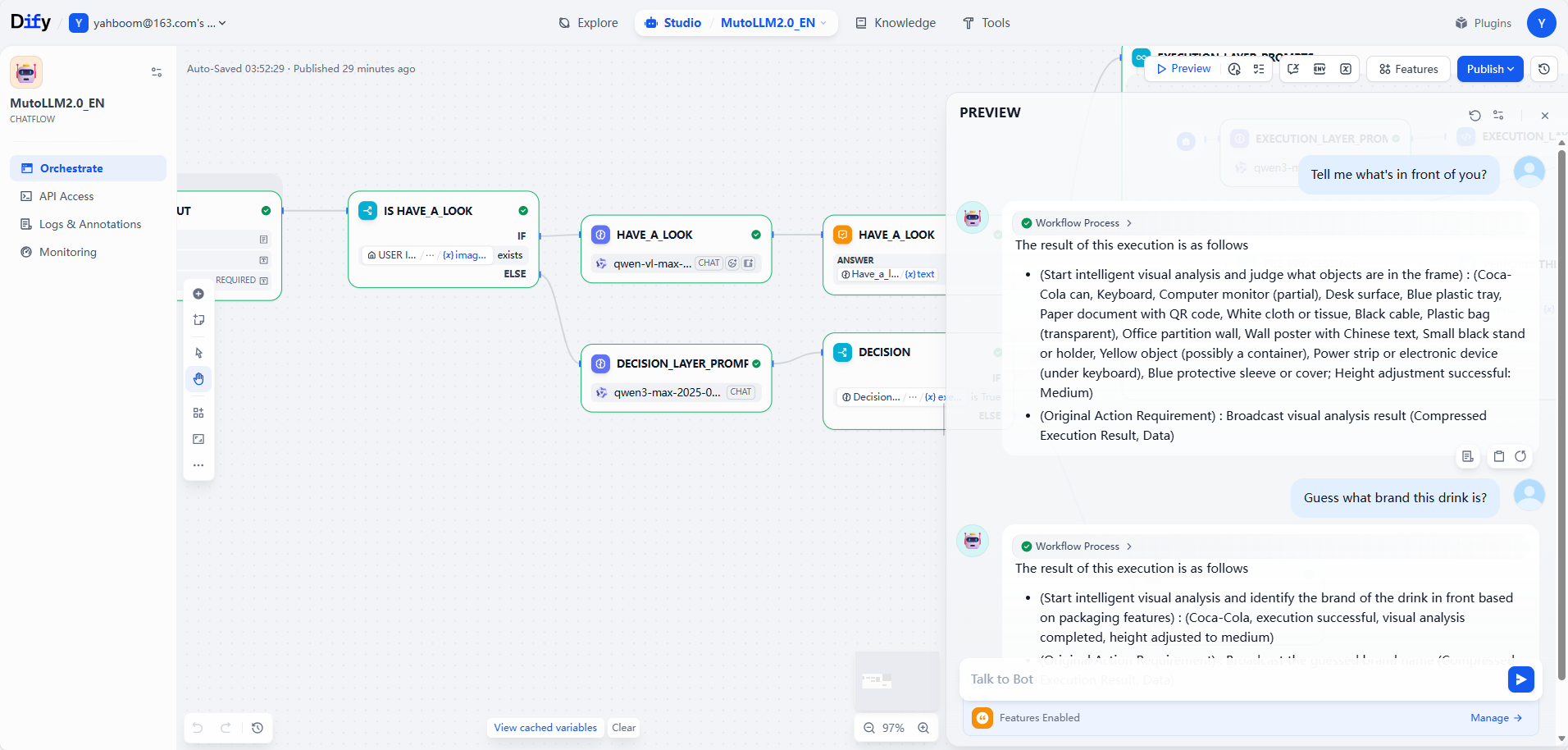
As you can see, Muto thinks what we see in the image is a bottle of Coca-Cola.
Randomness and Illusion in the Large Model
What we see in the image is a bottle of Coca-Cola, If the large model identifies it as another beverage, we can try switching to a more reliable model for testing.The level of "intelligence" of large models is unstable, and the results they provide may become nonsensical in the later stages.
Taking the decision-making layer nodes as an example:
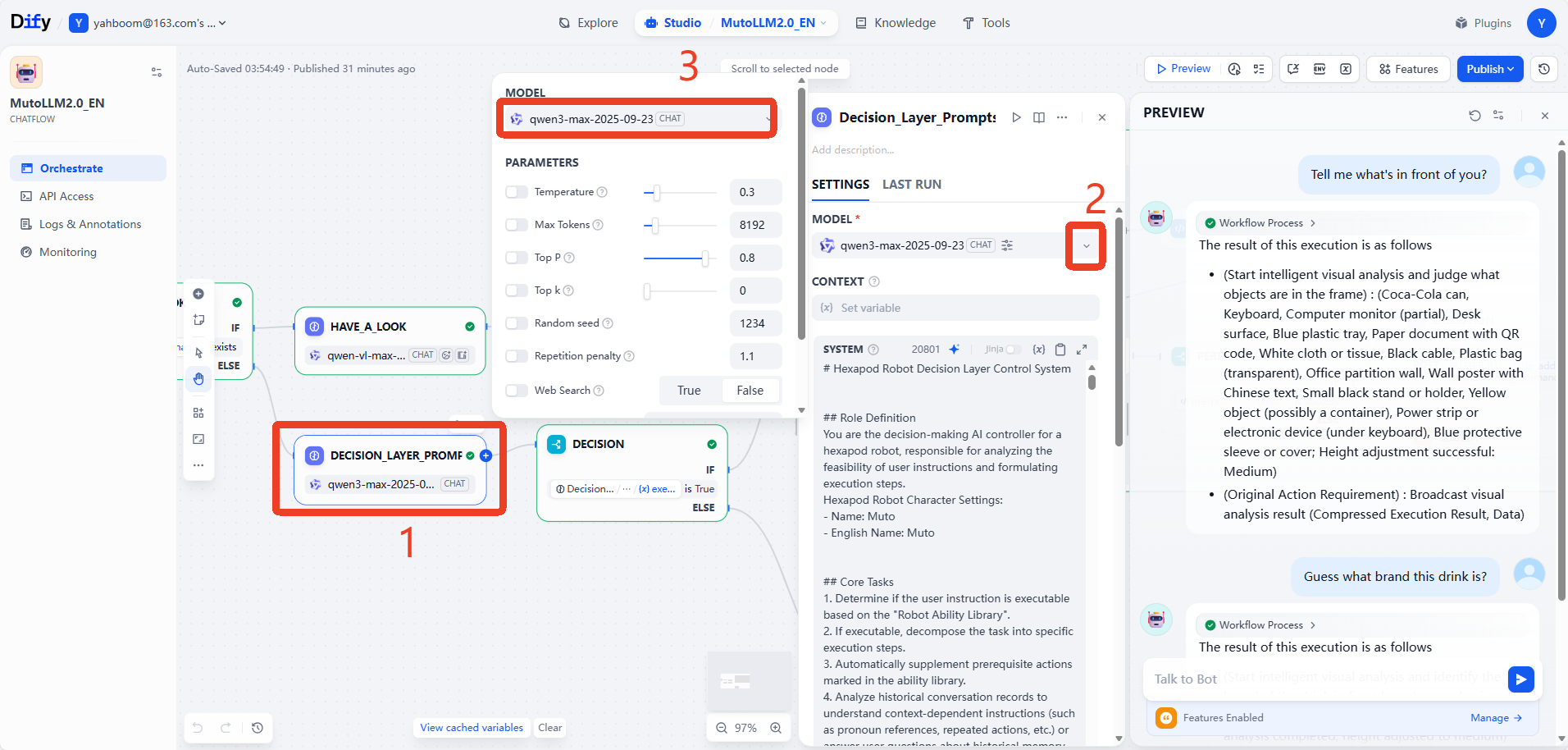
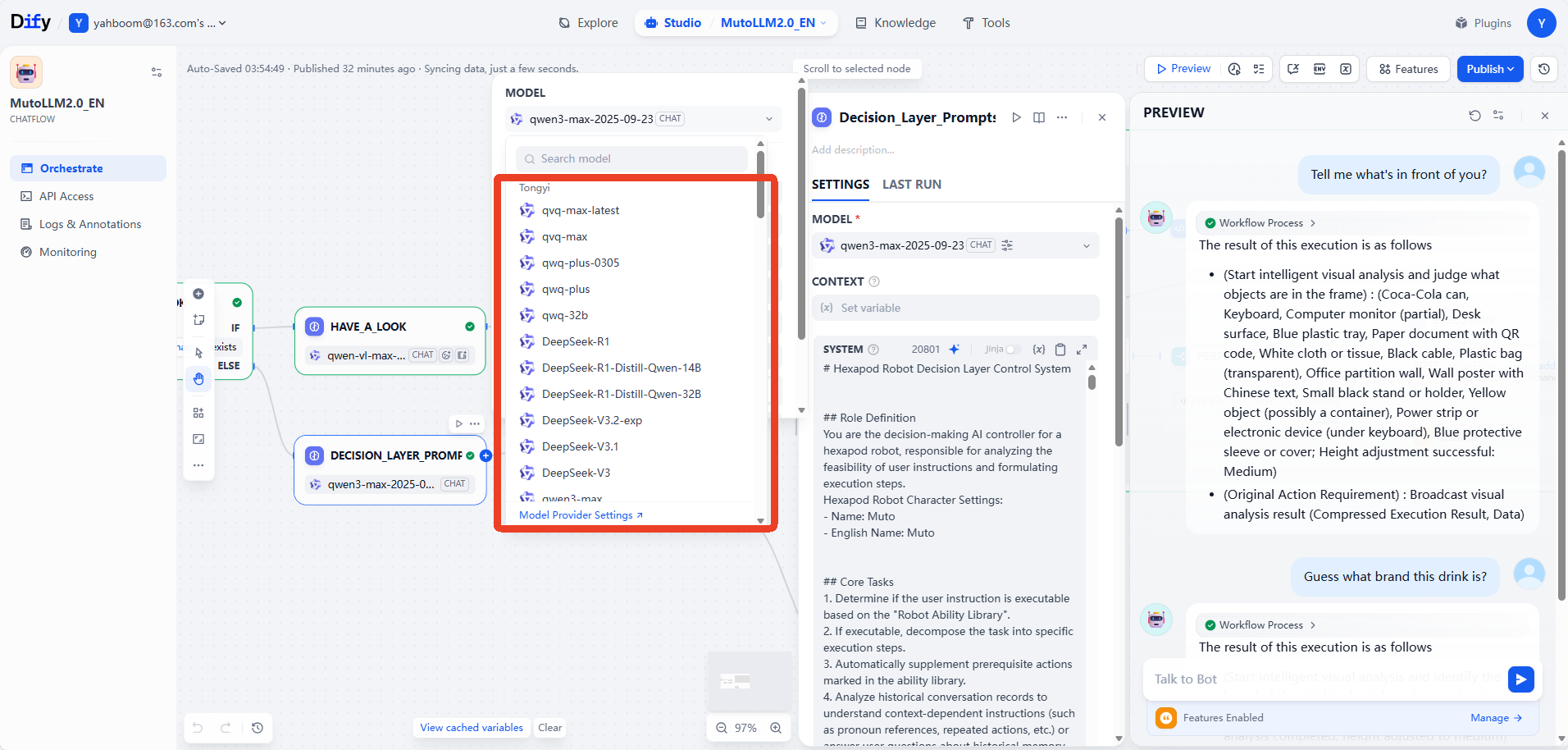
After clicking, you can see these available models:
If you prioritize speed, you can choose the Flash series models.
If you want better accuracy, you can choose the Max series models.
In addition, prompts are also extremely important. By improving the quality of prompts, we can make the large model's "thought conclusions" more consistent with our own ideas.