Welcome to ROSMASTER M1 PRO repository
4.Linear Velocity Calibration
Linear Velocity Calibration
Linear Velocity Calibration1. Course Content2. Preparation3. Calibration Demonstration4. Source Code Explanation
1. Course Content
Use a reference object of known length, such as a tape measure, to verify the accuracy of the chassis wheel odometry (computed from motor encoder data) and perform linear velocity calibration
Important
The car has been calibrated at the factory; there is no need to calibrate it again on first use. If you find that the odometry error is relatively large during subsequent use, refer to this tutorial to calibrate
2. Preparation
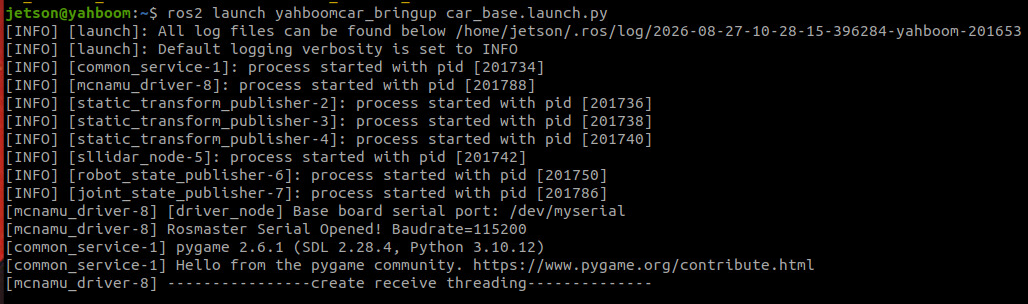
xxxxxxxxxxros2 launch yahboomcar_bringup car_base.launch.py
3. Calibration Demonstration
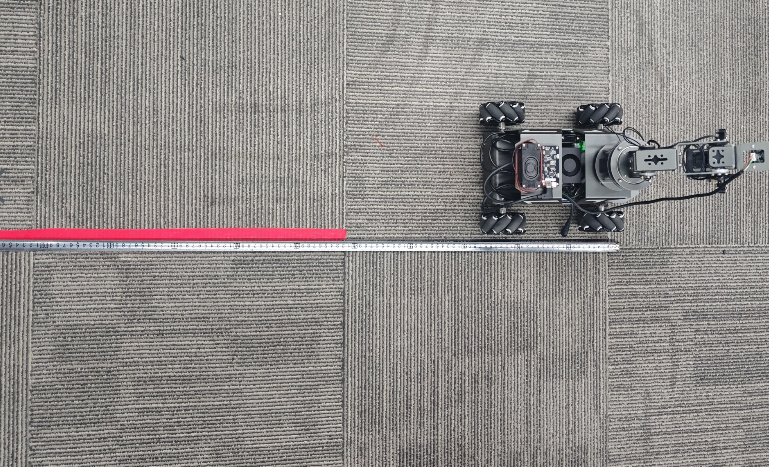
The demonstration uses the front of the car as the motion distance reference. Run the linear velocity calibration program
xxxxxxxxxxros2 run common_demo calibrate_linear
Tip
Optional additional startup parameters
| Parameter Name | Type | Default Value | Description |
|---|---|---|---|
| test_distance | float | 1.5 | Test movement distance (meters) |
| speed | float | 0.2 | Movement speed (m/s) |
| tolerance | float | 0.01 | Allowed error (meters) |
| direction | str | x | Test linear velocity direction, values x, y |
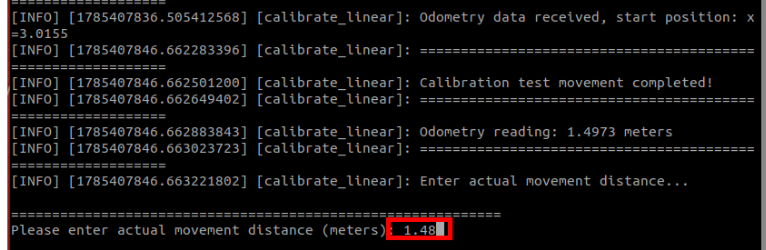
After the chassis finishes moving, use a tape measure or a standard scale reference to measure the chassis's actual movement distance, and enter the chassis's actual movement distance
Repeat the above calibration process to calibrate the y direction
xxxxxxxxxxros2 run common_demo calibrate_linear --ros-args -p direction:='"y"'
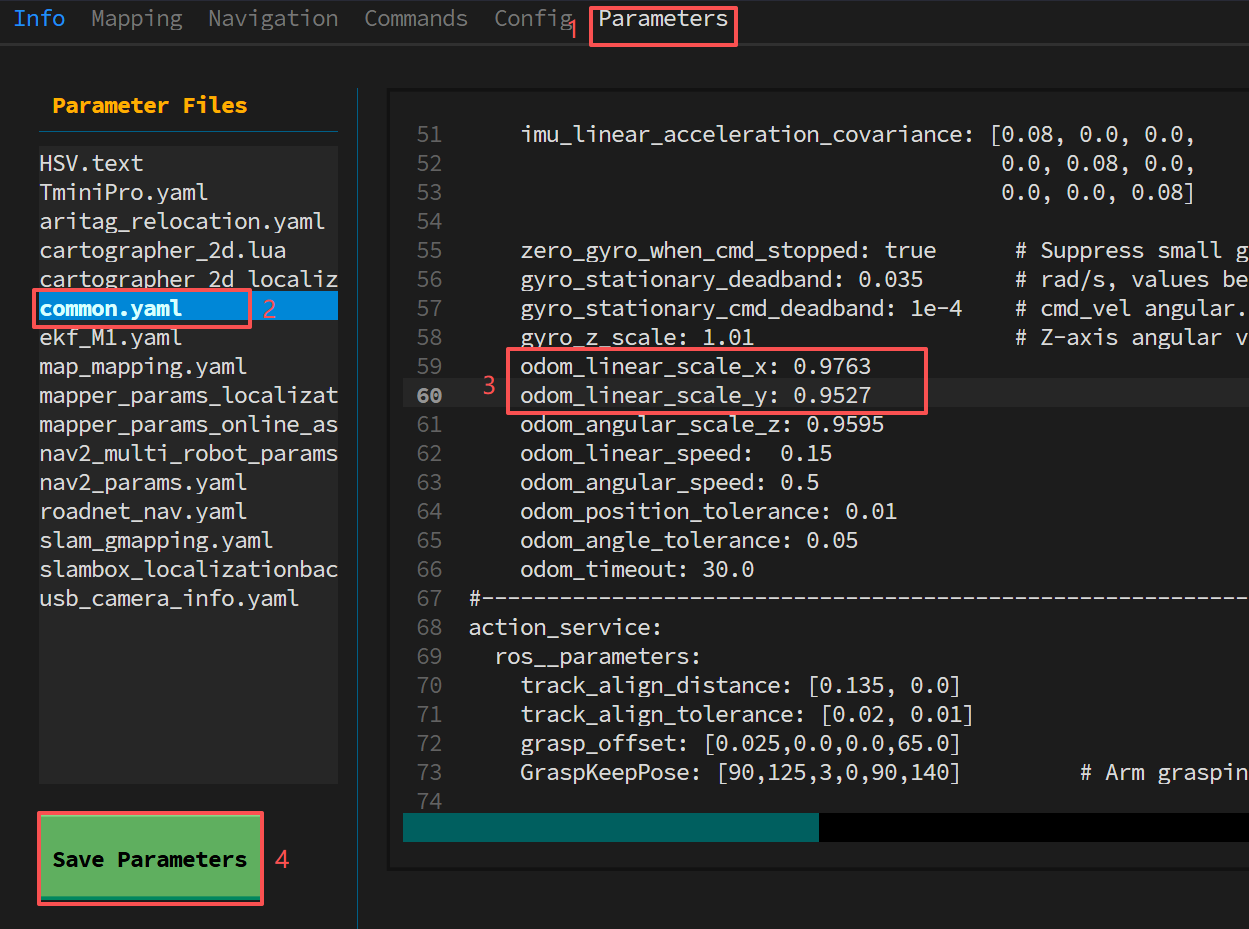
Apply the calibration coefficient
xxxxxxxxxxrobot_manage gui
4. Source Code Explanation
Source code path:
xxxxxxxxxx$HOME/yahboomcar_ros2_ws/yahboomcar_ws/src/common_demo/common_demo/calibration/calibrate_linear.py
1. odom_callback — Odometry data callback
Extract the current
xandycoordinates from the odometry messageOn the first reception, record the starting position
start_x / start_yand set theodom_receivedflag
2. control_loop — Calibration control main loop
Calculate the distance moved along the x-axis
moved_distanceand the target errorerrorWhen the error is within the tolerance range, stop moving, output the odometry reading, and set
waiting_for_inputto wait for the user to enter the actual distanceWhen the target has not been reached, decelerate in stages based on the remaining distance (< 0.1m minimum speed, 0.1~0.3m linear deceleration, > 0.3m full speed)
Use
copysignto determine the velocity direction and publish aTwistvelocity command
    def odom_callback(self, msg):        """Odometry data callback"""        self.current_x = msg.pose.pose.position.x        self.current_y = msg.pose.pose.position.y                if not self.odom_received:            self.odom_received = True            self.start_x = self.current_x            self.start_y = self.current_y            self.get_logger().info(f'Odometry data received, start position: x={self.start_x:.4f}, y={self.start_y:.4f}')        def control_loop(self):        if not self.odom_received:            return                if not self.test_started:            self.start_x = self.current_x            self.start_y = self.current_y            self.test_started = True                # Calculate moved distance (X-axis only)        moved_distance = self.current_x - self.start_x                # Calculate error        error = self.test_distance - abs(moved_distance)                # Check if target reached        if abs(error) < self.tolerance and not self.test_completed:            self.test_completed = True            self.get_logger().info('='*60)            self.get_logger().info('Calibration test movement completed!')            self.get_logger().info('='*60)            # Stop robot            self.cmd_vel_pub.publish(Twist())            self.timer.cancel()            # Display odometry reading            self.odom_distance = abs(moved_distance)            self.get_logger().info(f'Odometry reading: {self.odom_distance:.4f} meters')            self.get_logger().info('='*60)            self.get_logger().info('Enter actual movement distance...')                        # Set flag to notify main function to wait for user input            self.waiting_for_input = True            return
        # Target not reached, continue moving        move_cmd = Twist()        distance_to_go = abs(error)                # Velocity ramping: reduce speed when approaching target to prevent overshoot        min_speed = max(0.03, self.speed * 0.2)        close_threshold = 0.1    # Below this: minimum speed        ramp_threshold = 0.3     # Below this: linear deceleration        if distance_to_go < close_threshold:            ramp_speed = min_speed        elif distance_to_go < ramp_threshold:            ramp_speed = min_speed + (self.speed - min_speed) * (                (distance_to_go - close_threshold) / (ramp_threshold - close_threshold))        else:            ramp_speed = self.speed                move_cmd.linear.x = copysign(ramp_speed, error)        self.cmd_vel_pub.publish(move_cmd)