yahboom
HomeTutorialsProduct
Solution
Blog
Online Store
About Us
EN/中文
Store
ROSMASTER A1 PRO📖
00.Configuration and Operation Guide
  • 0. Unboxing and Review
  • 1.Assembly Videos
  • 2.User Manual
  • 3.Enter Docker (For Raspberry Pi)
  • 4.A1Pro Front Wheel Servo Calibration
  • 5.USB Camera Calibration
  • 6.Depth Camera Calibration
  • 7.FAQ
  • 8.Desktop Configuration Center and Remote Control Guide
01.Chassis Control Course
  • 1.Robot Information Publishing
  • 2.Robot Handle Control
  • 3.Robot Keyboard Control
  • 4.Linear Velocity Calibration
  • 5.Angular Velocity Calibration
  • 6.Robot URDF Model
  • 7.Robot EKF State Estimation
02.Lidar Course
  • 1.Lidar Introduction and Use
  • 2.Lidar Obstacle Avoidance
  • 3.Lidar Following
  • 4.Lidar Patrol
  • 5.GMapping-SLAM Mapping
  • 6.Cartographer-SLAM Mapping
  • 7.Slam-Toolbox Mapping
  • 8.Lifelong Mode Mapping
  • 9.Navigation2 Single Point Navigation
  • 10.Navigation2 Multi Point Navigation
  • 11.Cartographer Relocalization Navigation
  • 12.Slam-Toolbox Localization Navigation
  • 13.Synchronous Mapping And Navigation
  • 14.Aruco Visual Relocalization Navigation
  • 15.Mobile App Mapping And Navigation
  • 16.AprilTag Transport
  • 17.Color Block Transport
03.USB Camera-Depth Camera Course
  • 1.USB Camera Introduction
  • 2.USB Camera Intrinsic Calibration
  • 3.Nuwa-HP60C Camera Introduction (Depth Camera Only)
  • 4.Depth Camera Distance Measurement (Depth Camera Only)
  • 5.Depth Pseudo Color Image (Depth Camera Only)
  • 6.Block Volume Calculation (Depth Camera Only)
  • 7.Edge Detection (Depth Camera Only)
  • 8.RTAB-Map SLAM Mapping (Depth Camera Only)
  • 9.RTAB-Map Navigation (Depth Camera Only)
04.Robotic Arm and 3D Space Gripping Course
  • 0.Robotic Arm Basic Usage
  • 1.Robotic Arm Kinematics
  • 2.Robotic Arm Chassis Coordination Control
  • 3.AprilTag ID Sorting
  • 4.AprilTag Height Anomaly Sorting
  • 5.AprilTag Tracking and Grasping
  • 6.Color Block Sorting
  • 7.Color Block Height Anomaly Sorting
  • 8.Color Block Tracking and Grasping
  • 9.Wood Block Shape Sorting
  • 10.KCF Tracking and Grasping Objects
  • 11.Mediapipe Gesture ID Sorting AprilTag
  • 12.Mediapipe Gesture Height Sorting AprilTag
  • 13.Desktop Tracking and Grasping AprilTag
  • 14.3D Spatial Tracking AprilTag
  • 15.Line Following Obstacle Clearing
  • 16.Transformer Model Tracking Algorithm
05.Road Network Planning and Navigation
  • 1.Introduction To Road Network Planning
  • 2.Road Network Annotation
  • 3.Planning And Navigation Between Waypoints
  • 4.Road Network Navigation In Any Pose
  • 5.Path Re-planning
06.OpenClaw Basic Course
  • 1.Introduction to OpenClaw
  • 2.OpenClaw Core Concepts
  • 3.OpenClaw API-KEY Configuration
  • 4.OpenClaw Switch Models
  • 5.OpenClaw System Prompt Words
  • 6.OpenClaw Common CLI Commands
07.OpenClaw Interaction Method
  • 1.OpenClaw Webchat Interaction
  • 2.OpenClaw Tui Interaction
  • 3.OpenClaw Voice Dialogue Interaction
  • 4.OpenClaw WhatsApp Interaction
08.OpenClaw Development
  • 1.OpenClaw Connecting to Robot MCP Service
  • 2.Robot CLI Command Tool
  • 3.robot-control plugin tool
  • 4.reply-bridge plugin tool
  • 5.OpenClaw Multimodal Vision
  • 6.OpenClaw Chassis Control
  • 7.OpenClaw Robotic Arm Control
  • 8.OpenClaw Skills Development
  • 9.OpenClaw Scheduled Tasks
  • 10.OpenClaw Multi-Agent Intelligent Agent
  • 11.OpenClaw Active Interaction
  • 12.OpenClaw Vector Memory
09.OpenClaw Embodied Intelligent Application
  • 1.OpenClaw Target Tracking
  • 2.OpenClaw Arm Tracking And Grasping
  • 3.OpenClaw Arm Fixed-point Placement
  • 4.OpenClaw Waste Sorting
  • 5.OpenClaw SLAM Mapping And Navigation
  • 6.OpenClaw Navigation Transport
  • 7.OpenClaw AprilTag Grasping
  • 8.OpenClaw Color Line Patrol
  • 9.OpenClaw Visual Distance Measurement
10.OpenClaw Scenario Sandbox
  • 1.Map Description and Prop Placement
  • 2.Build Sand Table Map
  • 3.Visual Relocation Markers
  • 4.Map Mapping Markers
  • 5.OpenClaw Scenario Sandbox Comprehensive Case
11.AI Model Basics
  • 1.AI Large Model Types and Principles
  • 2.RAG Retrieval Enhancement and Model Training Samples
  • 3.Embodied Intelligent Robot System Architecture
  • 4.Embodied Intelligent Functions Core Source Code
12.AI Model Development
  • 1.Register a Model Service Provider Aaccount
  • 2.Configuring API-KEY
  • 3.Introduction to Dify
  • 4.Basic Dify Features
  • 5.AI Large Model Development - chatbot
  • 6.Deploy the RAG Knowledge Base
  • 7.RAG Knowledge Base + chatbot
  • 8.AI Agent Workflow
  • 9.Custom Wake-up Response
13.AI Model - Text Version
  • 1.Semantic Understand and Command Follow
  • 2.Multimodal Visual Understand
  • 3.Multimodal Visual Understand + Robotic Arm Gripping
  • 4.Multimodal Visual Understand+SLAM Navigation
  • 5.Robotic Arm Gripping+Multimodal Visual Understand+SLAM Navigation
  • 6.Intention Estimation
14.AI Model - Voice Version
  • 1.Semantic Understand and Command Follow
  • 2.Multimodal Visual Understand
  • 3. Multimodal Large Model+Robotic Arm Gripping
  • 4.Multimodal Visual Understand+SLAM Navigation
  • 5.Robotic Arm Gripping+Multimodal Visual Understand+SLAM Navigation
  • 6.Intention Estimation
15.Mediapipe Visual Course
  • 1.Hand Detection
  • 2.Posture Detection
  • 3.Overall Detection
  • 4.Facial Landmark Detection
  • 5.Face Detection
  • 6.Face Special Effects
  • 7.3D Object Recognition
  • 8.Brush
  • 9.Finger Control
  • 10.Palm Target Positioning
  • 11.Fingertip Trajectory Recognition
  • 12.Fingertip Gesture Control Cobotic Arm
  • 13.Gesture Grabbing and Releasing Objects
  • 14.Finger Control Robotic Arm
  • 15.Medipipe Gesture Control Robotic arm Cction Group
16.MoveIt2 Simulation Course
  • 1.MovelT2 Configuration
  • 2.MovelT2 Simulation-Reality Linkage
  • 3.Random Movement
  • 4.Forward Kinematics Design
  • 5.Inverse Kinematics Design
  • 6.Cartesian Path
  • 7.Scene Design
  • 8.Trajectory Planning
  • 9.Collision Detection
  • 10.3D Perception Obstacle‑Avoidance
17.Multi-vehicle Course
  • 1.Multi-vehicle Control
  • 2.Multi-vehicle Navigation
  • 3.Multi-vehicle Formation
18.YOLO26 Development
  • 1.CLI Use
  • 2.Object Detection
  • 3.Instance Segmentation
  • 4.Pose Estimation
  • 5.Image Classification
  • 6.Oriented Object Detection
  • 7.YOLOv26 + DeepSORT Tracking
  • 8.Monocular Depth Estimation
19.Control Board STM32 Driver Course
  • 0.Notes (Must Read)
  • 1.About Expansion Board
  • 2.STM32 Development Environment
  • 3.Button Control
  • 4.FreeRTOS Application
  • 5.Serial Communication
  • 6.SBUS Model Aircraft Remote Control
  • 7.CAN Bus Communication
  • 8.RGB Colorful Light Bar
  • 9.Timer Interrupt to Control PWM Servo
  • 10.Control Serial Port Servos
  • 11.Nine-axis Attitude Sensor to Obtain Data
  • 12.Control Motor
  • 13.Timer Captures the Encoder Data
  • 14.1 Kinematic Analysis of Mecanum Wheel
  • 14.2 Kinematic Analysis of Ackerman
  • 14.3 Kinematic Analysis of 4WD
  • 15.PID Control Robot Movement
20.Docker Course
  • 1.Docker Introduction and Installation
  • 2.Docker Basic Commands
  • 3.Docker Submission and Multi-Terminal Access
  • 4. Docker Startup Script
  • 5.Docker-Vscode Environment Construction
21.Image Processing Basics Course
  • 1. Introduction to Open Source CV
  • 2. Image reading and display
  • 3. Image writing
  • 4. Image quality
  • 5. Pixel Operation
  • 6. Image zoom
  • 7. Image cutting
  • 8. Image translation
  • 9. Image Mirroring
  • 10. Affine Transformation
  • 11. Image Rotation
  • 12. Perspective Transformation
  • 13. Grayscale processing
  • 14. Image Binarization
  • 15. Edge Detection
  • 16. Line drawing
  • 17. Rectangle and circle drawing
  • 18. Drawing text and pictures
22.Linux System Course
  • 1.Introduction to Linux system
  • 2.Ubuntu file system
  • 3.Ubuntu common commands
  • 4.Ubuntu common editors
  • 5.Ubuntu software operation commands
  • 6.Virtual machine installation
  • 7.SSH remote control
  • 8.VNC remote control
  • 9.Transfer files remotely
  • 10.Driver library and communication
  • 11.Static IP and hotspot mode
  • 12.Bind device ID
  • 13.Capacity expansion and resource allocation
  • 14.Update system software sources
  • 15.Set root user password
  • 16.sudo free password
  • 17.Connect to WiFi network
  • 18.View system version
  • 19.Customized service management
  • 20.Back up system image
23.ROS2 Basic Course
  • 1.Introduction to ROS2
  • 2.ROS2 install Humble
  • 3.ROS2 development environment
  • 4.ROS2 workspace
  • 5.ROS2 function package
  • 6.ROS2 node
  • 7.ROS2 topic communication
  • 8.ROS2 service communication
  • 9.ROS2 action communication
  • 10.ROS2 custom interface message
  • 11.ROS2 parameter service case
  • 12.ROS2 meta-function package
  • 13.ROS2 distributed communication
  • 14.ROS2 DDS
  • 15.ROS2 time related API
  • 16.ROS2 common command tools
  • 17.ROS2 rviz2 use
  • 18.ROS2 rqt toolbox
  • 19.ROS2 Launch startup file configuration
  • 20.ROS2 recording and playback tool
  • 21.ROS2 URDF model
  • 22.ROS2 Gazebo simulation platform
  • 23.ROS2 TF2 coordinate transformation
24.Main Control Course
Jetson Orin Nano_NX
  • 1.Jetson Orin board introduction
  • 2.Restore the factory image system
  • 3.Backup SSD system
  • 4.SSD expansion
  • 5.Network configuration
  • 6.SSH remote login
  • 7.VNC remote control
  • 8.Remote file transfer
  • 9.Jtop tool
  • 10.Exchange space expansion
Raspberry Pi
  • 1. Introduction to Raspberry PI 5
  • 2. Raspberry PI system installation and backup
  • 3. Powering the Raspberry PI 5
  • 4. Startup of Raspberry PI 5
  • 5. Update and upgrade operating system
  • 6. Introduction to raspi-config tool
  • 7. config.txt file description
  • 8. Network Configuration
  • 9. remote access
  • 10. Transfer files remotely
  • 11. Set display resolution and rotation
  • 12. Set screen to sleep
  • 13. Play audio and video
  • 14. Using USB camera
  • 15. Using MIPI camera
  • 16. Get real-time temperature of Raspberry Pi
RDKX5
  • 1.Introduction to RDK X5 board
  • 2.Write system file
  • 3.Hardware interface description
  • 4.Install case and other accessories
  • 5.Network configuration
  • 6.Remote login
  • 7.Update system
  • 8.srpi-config user guide
  • 9.config. txt configuration file
  • 10.Self-startup setting
  • 11.RDK exclusive command usage
  • 12.Linux command usage
  • 13.GPIO readwrite operation
  • 14.Image classification algorithm
  • 15.Use USB camera
  • 16.Use MIPI camera
  • 17.Binocular camera depth algorithm
  • 18. Controlling RGB Cooling Fans
Download
  • SystemFile
  • Code
  • 3D_Model_File
  • Software_Tools
  • Hardware_Info
  • Introduction_Manual
  • Script_File
  • Dify AI Agent
Download ZIP

Welcome to ROSMASTER A1 PRO repository

5.OpenClaw System Prompt Words

OpenClaw System Prompt Words

OpenClaw System Prompt Words1. Course ContentCourse Overview2. 📂 Switch Workspace3. AGENTS.md4. SOUL.md5. IDENTITY.md6. HEARTBEAT.md7. 🛠️ TOOLS.md8. 👤 USER.md9. 🧠 MEMORY.md

1. Course Content

Course Overview

  • 💡 OpenClaw adopts an innovative "file as prompt" architecture — the AI Agent's behavior, identity, memory, tool usage rules, etc., are all defined and loaded through multiple Markdown files in the Workspace.


2. 📂 Switch Workspace

  • OpenClaw's system prompt words and skills are stored in: $HOME/.openclaw/workspace workspace path

  • The factory preset includes different workspace contents in Chinese and English. The content meaning is the same, only the language differs. You can switch the OpenClaw workspace document language based on your needs. The factory default document is in Chinese.

    ~/MODELS/openclaw
  • Click the desktop app to configure Chinese or English.
    image-20260903205305976

    Click Voice and Interaction Language and select zh or en.
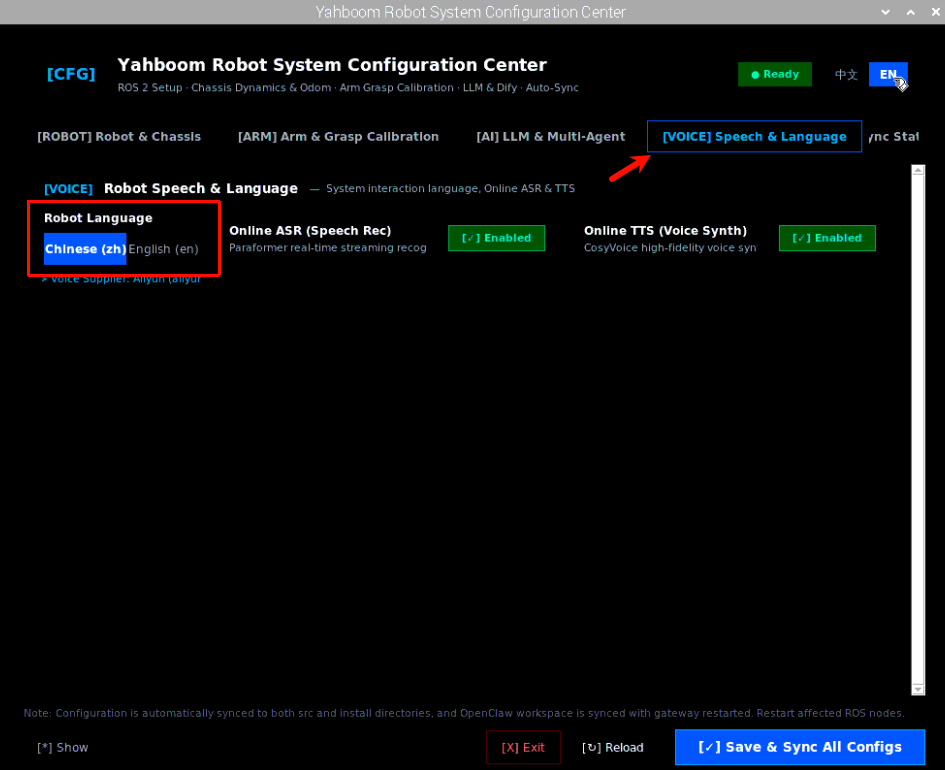
    image-20260908163639114

    After modification, click Save and Exit.
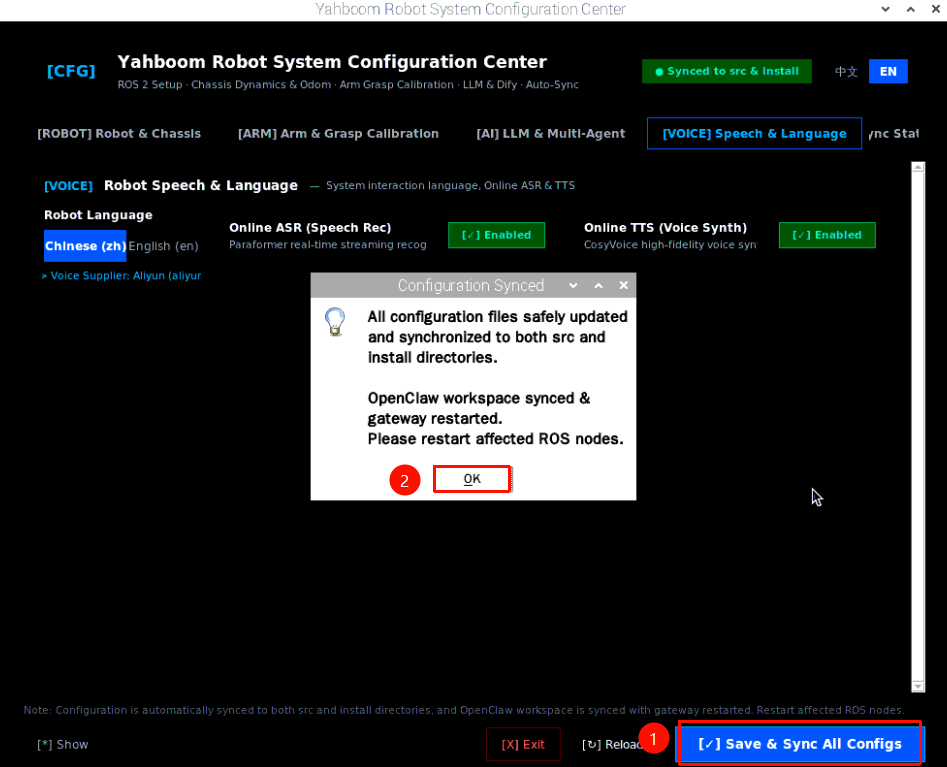
    image-20260908163730966

After switching successfully, you need to enter /reset in the corresponding session to reset the conversation.

3. AGENTS.md

  • Function Description

AGENTS.md defines the top-level specifications for how the Agent operates in the workspace. 📖 It can be understood as the Agent's "user manual" — telling the Agent how to start up, how to manage memory, what things it can do, and what things it absolutely cannot do.

  • Content Structure

AGENTS.md mainly includes the following core sections:

SectionDescription
First RunGuides the Agent's initialization process during first startup (reads BOOTSTRAP.md)
Physical BodyDescribes the Agent's physical carrier (robotic arm, chassis, camera) and control methods
Session StartupSpecifies the startup process and file reading order for each session
Memory SystemDefines the layered architecture of daily records and long-term memory
Red Line RulesLists absolutely prohibited behaviors (destructive commands, modifying robot program code)
Operation SpecificationsDistinguishes between operations that can be freely executed and operations that require prior inquiry
Memory MaintenanceMemory organization and update mechanism during heartbeat

Note

⚠️ The factory AGENTS.md prompt restricts OpenClaw from modifying robot program code

4. SOUL.md

  • Function Description

SOUL.md is the Agent's "soul" and kernel 🧠. It defines the Agent's thinking methods and behavioral guidelines when facing tasks — how to control the robot body, how to find and use skills, how to plan and execute actions, and under what circumstances it should pause or refuse execution. SOUL.md shapes the Agent's core behavioral pattern as a "robot operator".

  • Working Principle

SOUL.md is read by the Agent at session startup as the underlying guiding principle for task execution. It does not specify concrete skill parameters but rather defines what kind of thinking process the Agent should use when encountering any task. For example, the Agent is forced to check the skill library before starting any task, and cannot execute directly based on feeling or memory — this habit of "checking documentation before doing work" is defined by SOUL.md.


5. IDENTITY.md

  • Function Description

IDENTITY.md defines the AI Agent's self-awareness and personality characteristics. It defines who the Agent "is" — its name, personality, language style, and basic identity positioning. This file gives the Agent a consistent personality when interacting with users.

  • Working Principle

At each session startup, the Agent reads IDENTITY.md and establishes "self-awareness" based on it. This information affects the Agent's tone when answering questions, the way it proactively offers help, and the style it uses to build relationships with users. For example, an Agent set to be "friendly and gentle" will naturally use more amicable language expressions when replying to users.

6. HEARTBEAT.md

  • Function Description

HEARTBEAT.md is the configuration file that controls the heartbeat detection mechanism in OpenClaw ⏰. The heartbeat mechanism allows the Agent to periodically "wake up" and execute background checks and maintenance tasks without user-initiated sessions. This is similar to robot automatic timed inspection — the Agent can silently complete memory organization, status checks, and other work in the background.

  • Working Principle

The OpenClaw Gateway periodically checks the content of the HEARTBEAT.md file to decide whether to trigger the Agent's heartbeat API call:

  • File is empty or contains only comments: Skip heartbeat call, Agent will not be woken up in the background

Note

💤 The factory configuration of the robot has the heartbeat mechanism turned off by default.


7. 🛠️ TOOLS.md

  • Function Description

TOOLS.md is the Agent's localized notes for tool usage 📝. In the OpenClaw system, "Skills" define the general working methods of tools, while TOOLS.md records the Agent's own unique configurations and personalized settings. Simply put: Skills are instruction manuals (general), and TOOLS.md is your personal notes (unique).

  • Working Principle

During a session, the Agent reads both relevant Skills documentation to understand the general usage of tools and reads TOOLS.md to obtain configurations related to its own deployment environment.

8. 👤 USER.md

  • Function Description

USER.md is the dedicated file for the Agent to understand and remember user information. If IDENTITY.md is the window for the Agent to understand "who I am", then USER.md is the window for the Agent to understand "who you are interacting with". It records the user's basic information, preferences, project background, and other contextual information, helping the Agent provide more personalized and thoughtful service.

  • Working Principle

At each session startup, the Agent reads USER.md according to the process specified in AGENTS.md. Through this file, the Agent can:

  • Know how to address the user (name, form of address)

  • Understand the user's timezone, preferences, and other background information

  • Remember things the user cares about and projects in progress

9. 🧠 MEMORY.md

  • Function Description

MEMORY.md is the AI Agent's long-term memory file 📚. In OpenClaw's memory system, there are two levels of memory storage:

  1. 📓 Daily Records (memory/YYYY-MM-DD.md): Records raw events and dialogue logs that occur each day, similar to a human's "diary"

  2. 🗂️ Long-term Memory (MEMORY.md): Refined information extracted from daily records, similar to a human's "long-term memory" — containing important events, learned experiences, key decisions, and insights

  • Working Principle

The loading and use of MEMORY.md follows these rules:

  • Loaded only in main sessions: When the user directly converses with the Agent, the Agent reads MEMORY.md to obtain long-term memory

  • Maintained autonomously by the Agent: The Agent can freely read, edit, and update MEMORY.md during main sessions


Note

In actual user practice, you can:

  • ✏️ Proactively write important information: Write content you think the Agent should remember long-term directly into MEMORY.md

  • 👀 Observe Agent autonomous maintenance: After the Agent runs for a period of time, look at the content automatically accumulated in MEMORY.md

  • 🔄 Manage memory content: Regularly check and organize MEMORY.md, remove outdated information, ensuring long-term memory remains refined and accurate

OpenClaw Switch Models
OpenClaw Common CLI Commands

COMPANY

  • About us
  • Team Style
  • Blog

LEARNING & EXPLORATION

  • Tutorials
  • Edge AI hardware
  • Educational robots
  • Embedded intelligent hardware

WHERE TO BUY

  • Yahboom Online Store
  • Amazon
  • Alibaba
  • AliExpress
  • Mercado

TECHNOLOGY SUPPORT

  • Email: support@yahboom.com

BE A DISTRIBUTOR

  • Email: sales@yahboom.com
QR Code

Copyright © 2017-2026 Yahboom. All Rights Reserved.

EN/中文