Welcome to ROSMASTER A1 PRO repository
4.Multimodal Visual Understand+SLAM Navigation
4. Multimodal Visual Understanding + SLAM Navigation (Voice Version)
1. Course Content
Learn how the large model integrates voice interaction, multi-point autonomous navigation, physical space semantic mapping, and multimodal visual perception;
Master the point calibration of the map semantic mapping file
map_mapping.yamland the Dify variable synchronization mechanism;Learn to perform initial pose calibration (2D Pose Estimate) in the RViz2 visualization interface;
Issue complex long-duration tasks through voice dialogue: autonomous cross-room patrol, image-aware multimodal memory, returning along the original route, and outputting a detailed report through speech synthesis (TTS);
Analyze the core source code of the underlying navigation Action client and the coordinated scheduling of the action service side.
2. Preparation
2.1 Description
This lesson is applicable to controllers such as Raspberry Pi 5, Jetson Orin NANO, and D-Robotics RDK X5:
Raspberry Pi 5: You need to first enter the Docker container before executing ROS 2 related commands. Refer to [3.Enter Docker (For Raspberry Pi)] in [Robot Configuration and Operation Guide];
Orin / RDK X5: Directly run the commands in the vehicle terminal; there is no need to enter Docker.
2.2 Start the Dify Local Large Model Environment
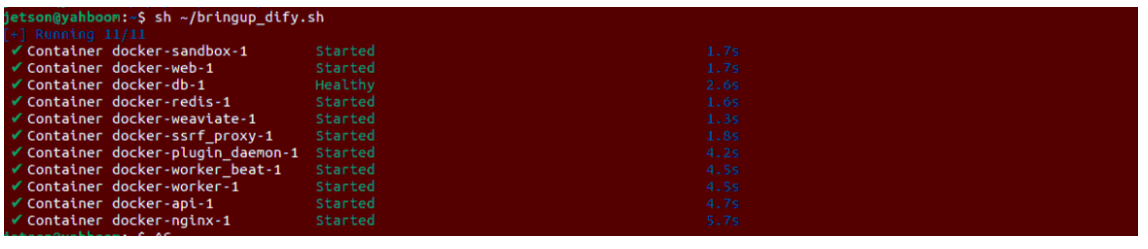
Enter the following command in the host terminal to start the Dify service:
sh ~/bringup_dify.shThe terminal prints the following information, indicating that the Dify service is connected successfully:
Important
Prerequisite:
This lesson requires the robot to navigate on an already-built map. Please ensure that you have built and saved a grid map (such as map.yaml) according to the navigation chapter tutorial.
2.3 Configure the Map Point Semantic Mapping (map_mapping.yaml)
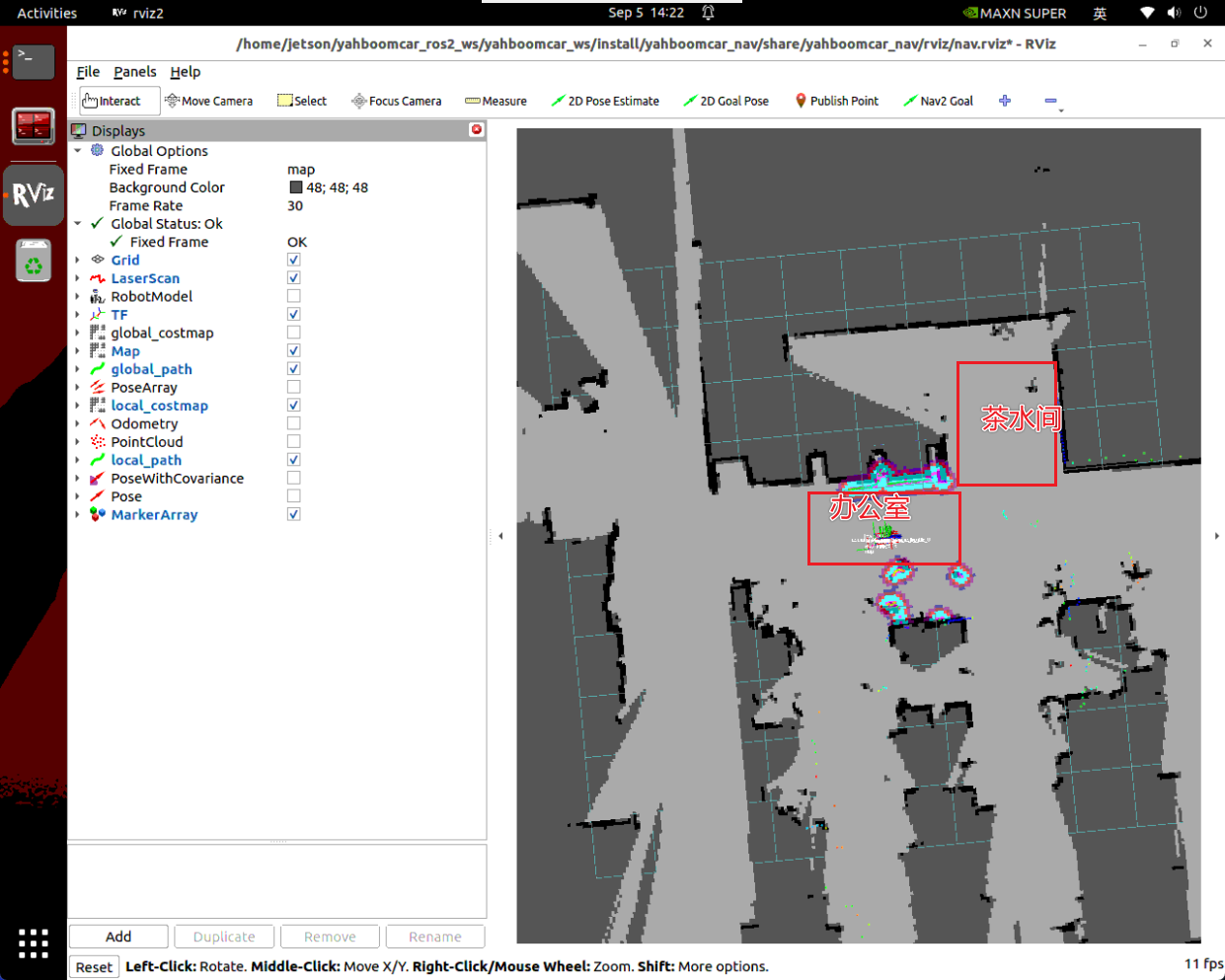
In order for the large model to understand the physical coordinates of natural-language locations such as "pantry" and "office", the mapping relationship between location names and absolute map coordinates needs to be established in the configuration file.
1. Calibrate the Room Coordinates and Orientation
Connect to the robot desktop via VNC and run the following commands to start the navigation nodes:
Start the low-level driver and lidar:
xxxxxxxxxxros2 launch yahboomcar_nav laser_bringup_launch.pyStart the visualization node (or start the display on the virtual machine side):
xxxxxxxxxxros2 launch yahboomcar_nav display_nav_launch.pyStart navigation: Note: Whichever localization method was used during point calibration must be used for subsequent navigation, because the pose may differ for each localization method
xros2 launch yahboomcar_nav navigation_teb_launch.py
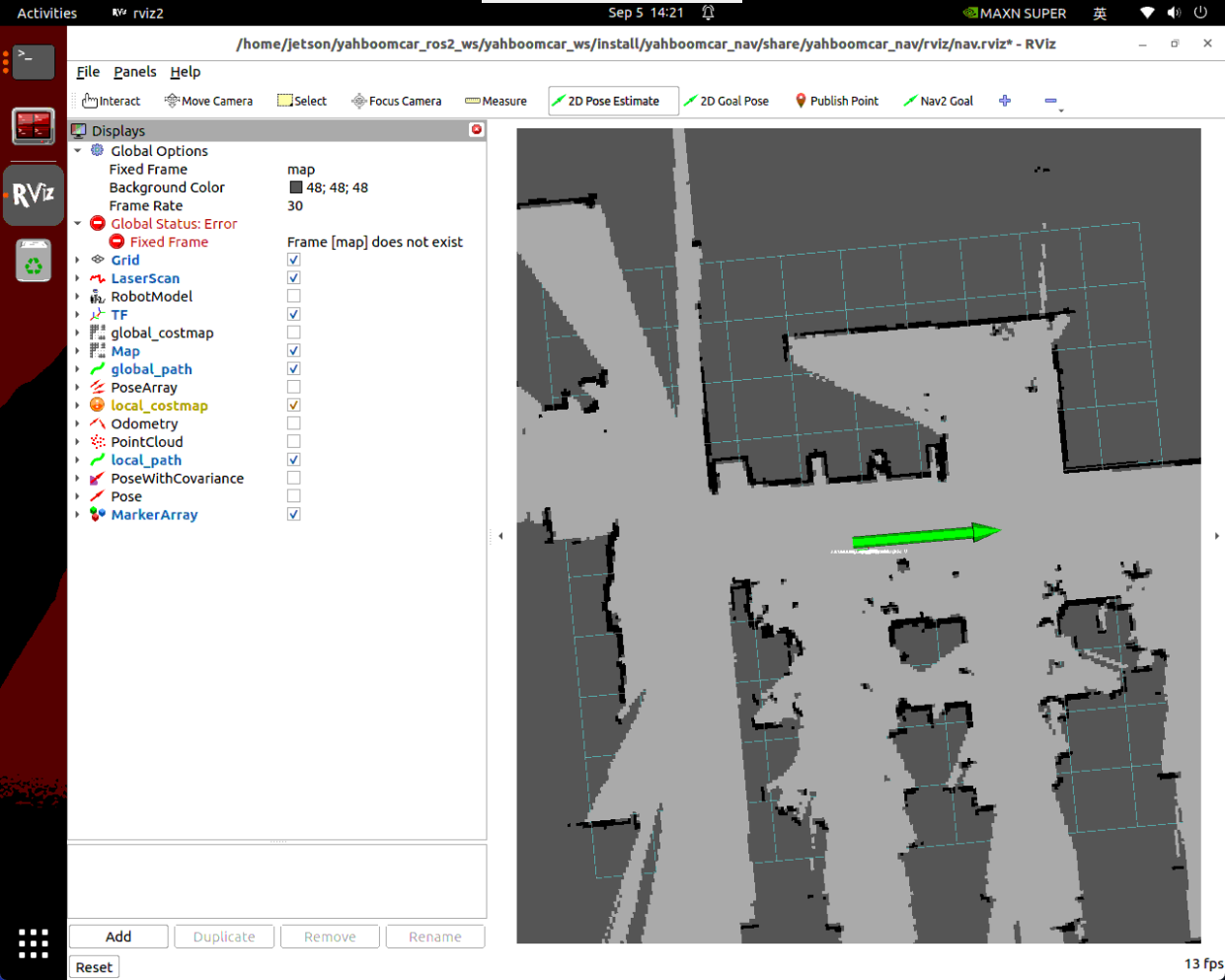
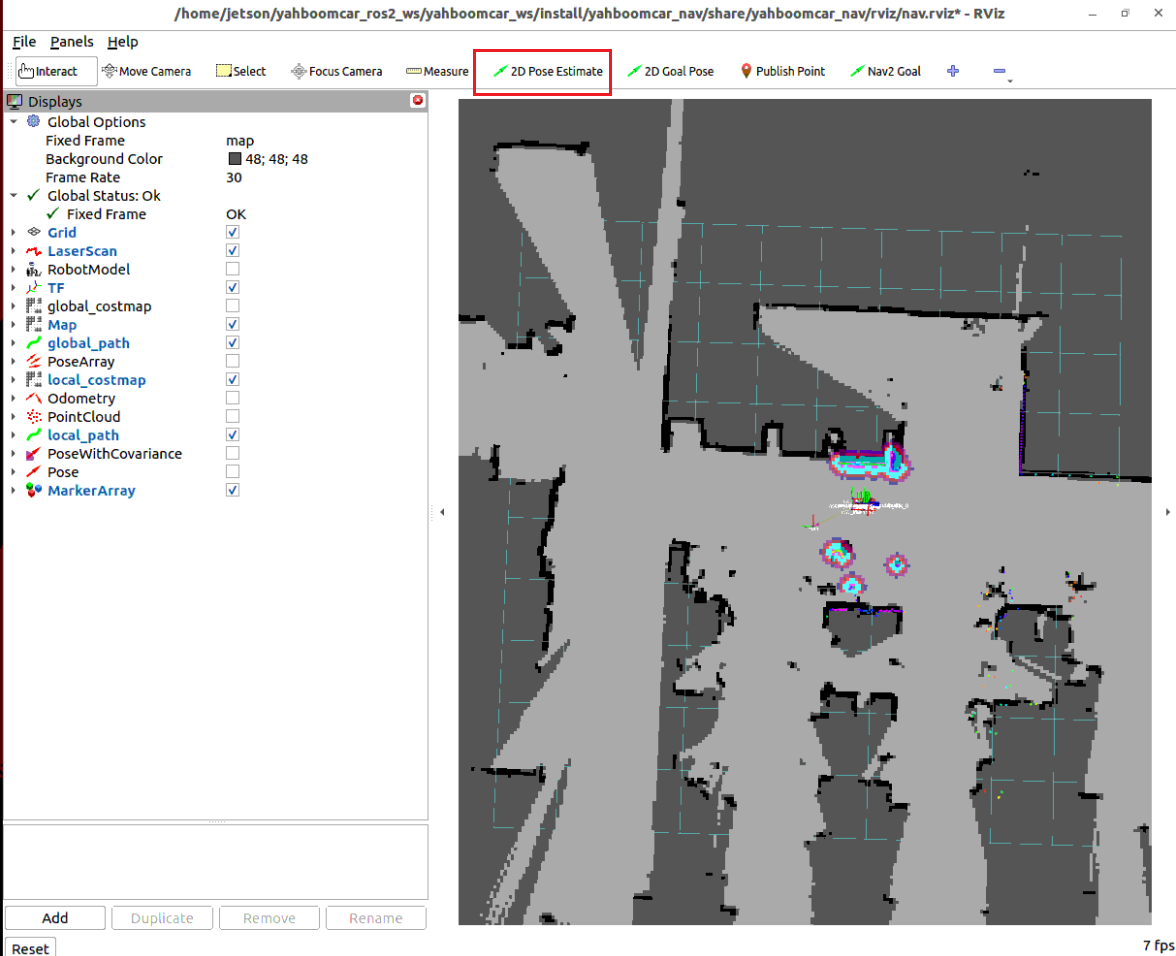
# If using the Cartographer relocalization navigation method:ros2 launch yahboomcar_nav localization_imu_odom.launch.py use_rviz:=false load_state_filename:=$HOME/yahboomcar_ros2_ws/yahboomcar_ws/src/yahboomcar_nav/maps/map.pbstreamros2 launch yahboomcar_nav navigation_cartodwb_launch.py maps:=$HOME/yahboomcar_ros2_ws/yahboomcar_ws/src/yahboomcar_nav/maps/map.yamlOpen the RViz2 navigation interface, click the 2D Pose Estimate tool in the toolbar at the top, and mark the real physical position and orientation of the car on the map:
Consider the target areas of the car on the map (for example, "office", "pantry"):
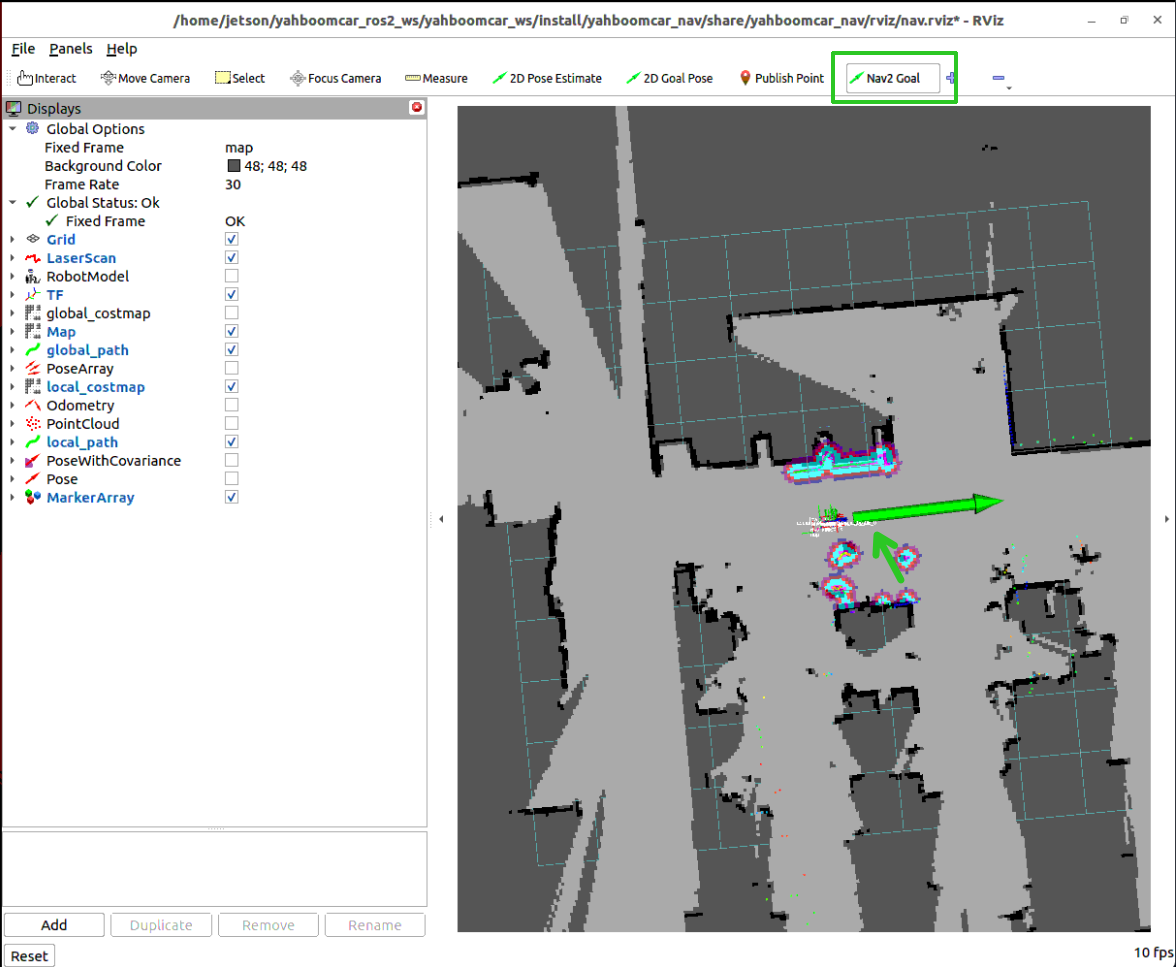
In RViz2, use the 2D Goal POSE tool to click the target location of the room, driving the robot to navigate to that point:
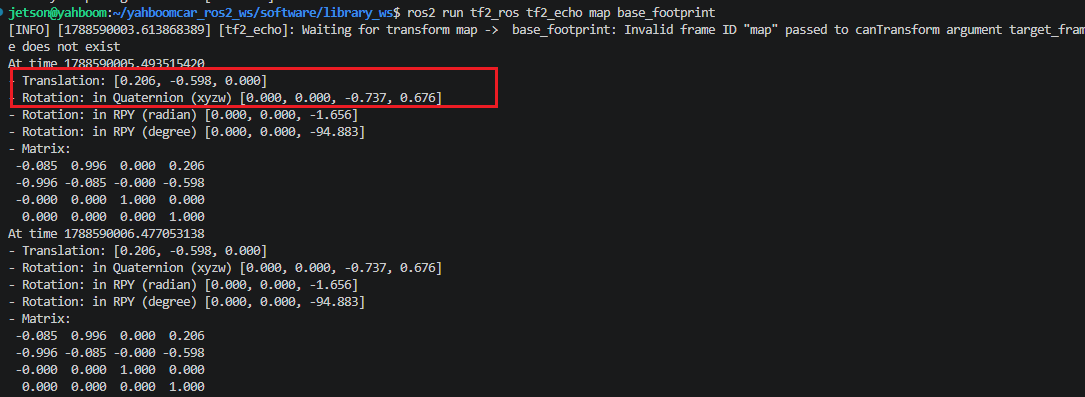
After the robot arrives at the target room, run the following command in the terminal to obtain the precise pose parameters of the car in the map coordinate frame:
xxxxxxxxxxros2 run tf2_ros tf2_echo map base_footprintThe terminal prints the translation Translation [x, y, z] and quaternion rotation Rotation [x, y, z, w] of the current pose:
2. Edit the map_mapping.yaml File
Configuration file path:
xxxxxxxxxx~/yahboomcar_ros2_ws/yahboomcar_ws/src/multi_brains/config/map_mapping.yamlOpen the map_mapping.yaml map mapping file, and under common_map_areas fill in the room names and coordinates obtained just now:
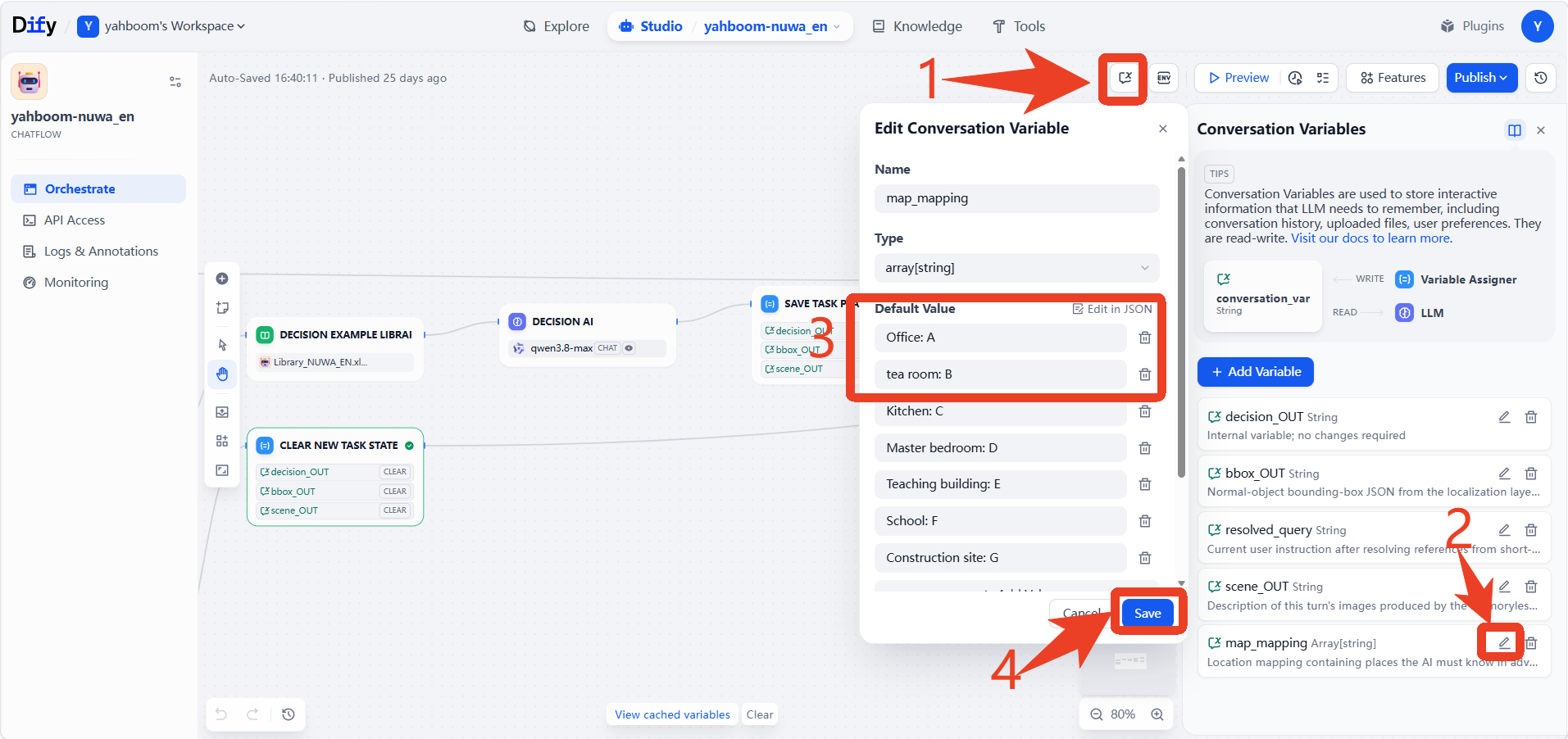
xxxxxxxxxxcommon_map_areas# General navigation A name'Office' position x0.206 y-0.598 z0.0 orientation x0.0 y0.0 z-0.737 w0.676 B name'tea room' position x1.064 y-2.432 z0.0 orientation x0.0 y0.0 z-0.141 w0.990After configuration is complete, recompile and apply the environment variables:
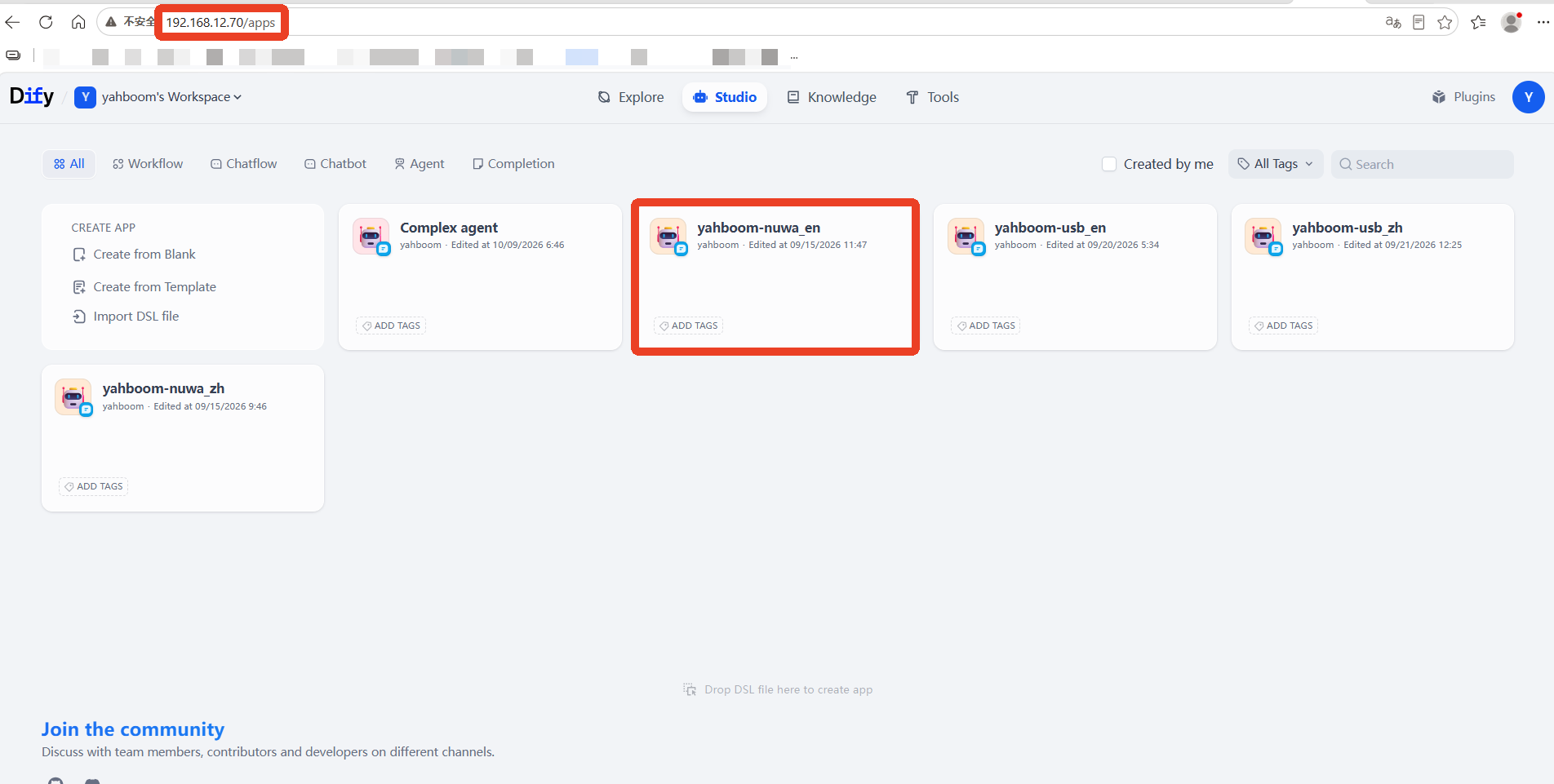
xxxxxxxxxxcd ~/yahboomcar_ros2_ws/yahboomcar_ws/colcon build --packages-select multi_brainssource install/setup.bashThen, on a LAN computer, open the Dify workbench application (http://<vehicle IP>) in a browser, and synchronously update the map_mapping variable in the [Conversation Variables] of the corresponding application:
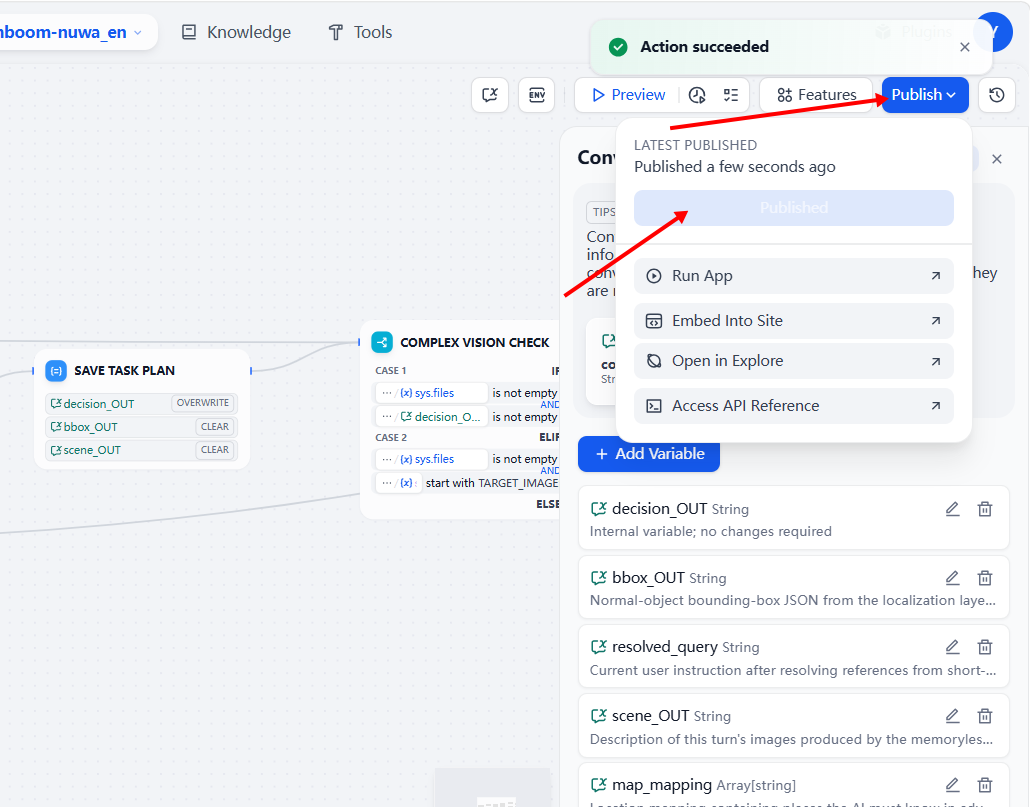
Click [Publish Update]:
3. Running the Cases
3.1 Start the Embodied Intelligence Master Control Node (Voice Mode)
Enter the following command in the vehicle terminal to start the large model voice embodied control service:
xxxxxxxxxxros2 launch multi_brains llm_agent_control.launch.pyAfter the node is ready, the terminal prints the following information:
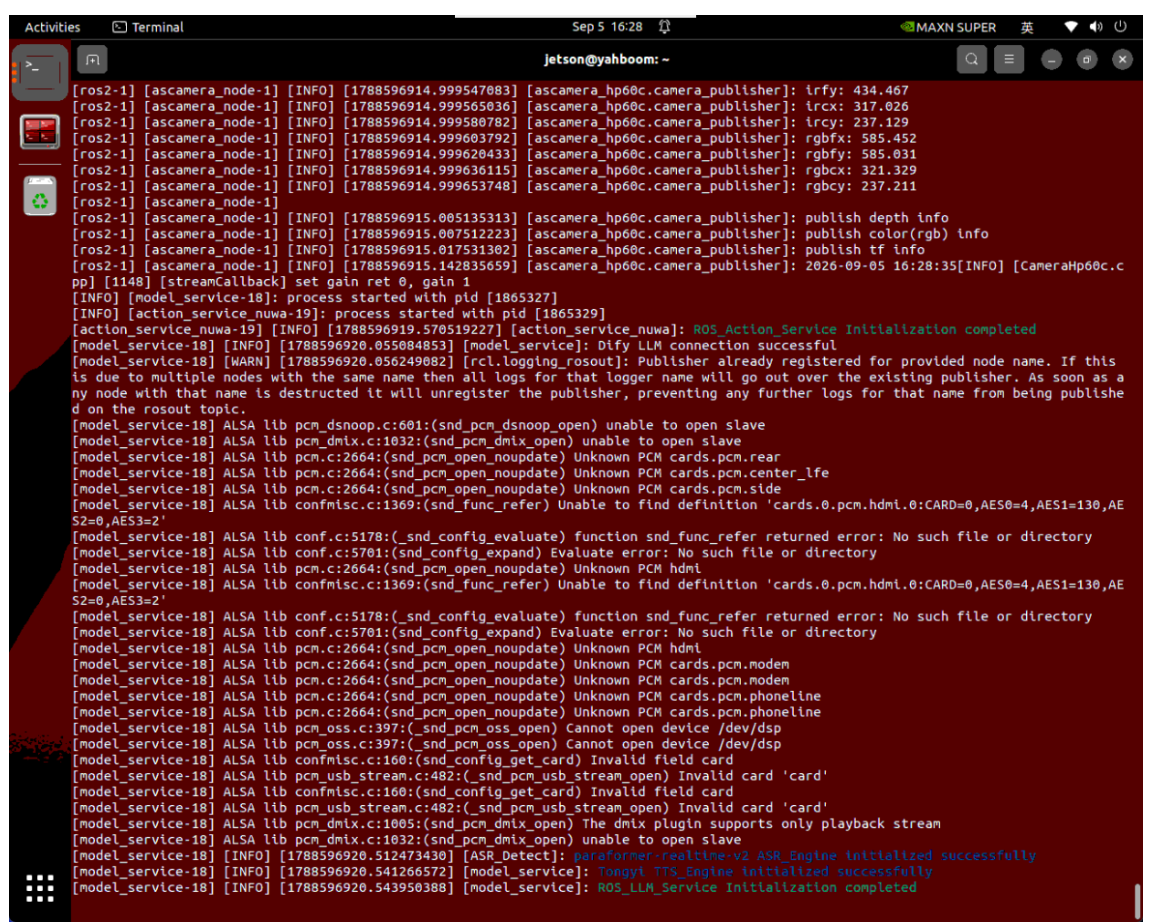
3.2 Start the SLAM Navigation and Visualization System
On the vehicle desktop or through VNC, open another terminal and start the navigation visualization interface:
xxxxxxxxxxros2 launch yahboomcar_nav display_nav_launch.pyThen open another terminal and start the underlying navigation algorithm (the TEB local path planner is recommended): Note: Whichever localization method was used during point calibration must be used for subsequent navigation, because the pose may differ for each localization method
xxxxxxxxxxros2 launch yahboomcar_nav navigation_teb_launch.py#Relocalization method; for details, refer to Cartographer relocalization navigationros2 launch yahboomcar_nav localization_imu_odom.launch.py use_rviz:=false load_state_filename:=$HOME/yahboomcar_ros2_ws/yahboomcar_ws/src/yahboomcar_nav/maps/map.pbstream
ros2 launch yahboomcar_nav navigation_cartodwb_launch.py maps:=$HOME/yahboomcar_ros2_ws/yahboomcar_ws/src/yahboomcar_nav/maps/map.yaml
In the opened RViz2 window, use the 2D Pose Estimate tool to perform initial alignment and localization according to the parking position of the car in the real scene:
3.3 Voice Interaction Specification
In voice mode, there is no need to open a text chat node; interact directly with the car's microphone by voice:
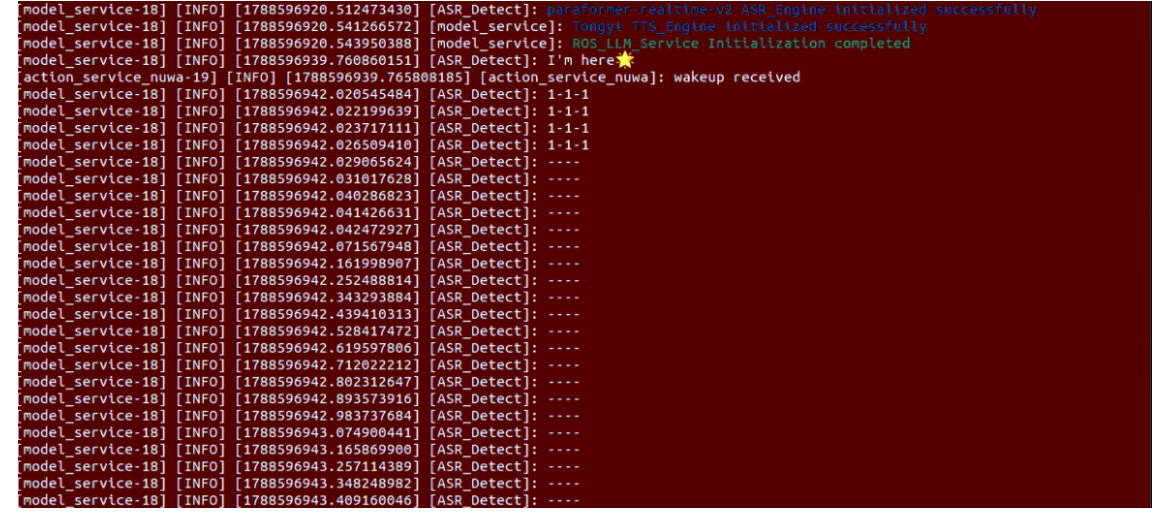
First clearly call the wake word: "Hi,yahboom" (or "yahboom, yahboom");
Listen for the car's voice response: "I'm here, please give me instructions" or various personalized wake-up voices;
After the response ends, you can speak the test instruction to the robot.
3.4 Classic Test Case (Cross-Room Patrol and Multimodal Long Memory Report)
After waking up yahboom, speak the composite inspection task instruction to the car:
xxxxxxxxxxGo to the pantry, help me see what items are inside, then return to the office and reportThe terminal prints the continuous long-chain task plan parsed by the large model:

Execution Process and Phenomena:
Autonomous navigation to the pantry: The car chassis automatically plans a global and local obstacle-avoidance path and travels smoothly to the "pantry" point:
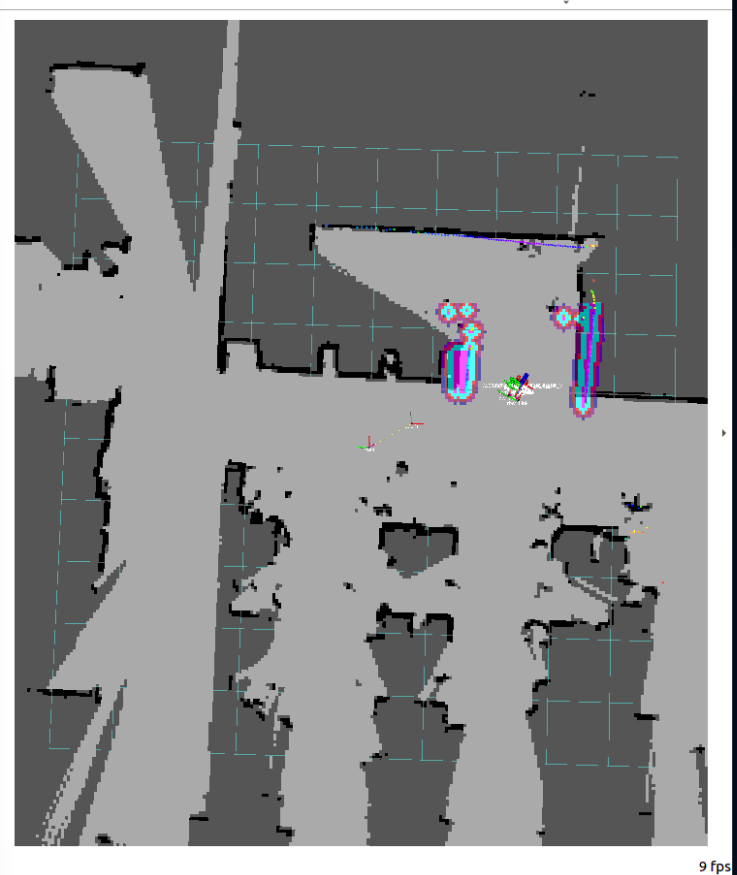
Visual perception and image memory: After arriving at the pantry, the car brakes and stops, calls the
seewhat()action to take a photo, and the multimodal large model analyzes the image and recognizes the objects in the scene (such as a tissue box, a drinking cup, colored blocks, etc.). The photo is saved at:xxxxxxxxxx~/yahboomcar_ros2_ws/yahboomcar_ws/cache/image_raw.pngAutonomous return to the office: The large model saves the observed object information in the conversation context and automatically plans a path to return to the starting point "office":

Proactive voice summary report: After arriving at the office, the robot triggers
finish_dialogue()and reports the patrol results to the user in detail through speech synthesis (TTS):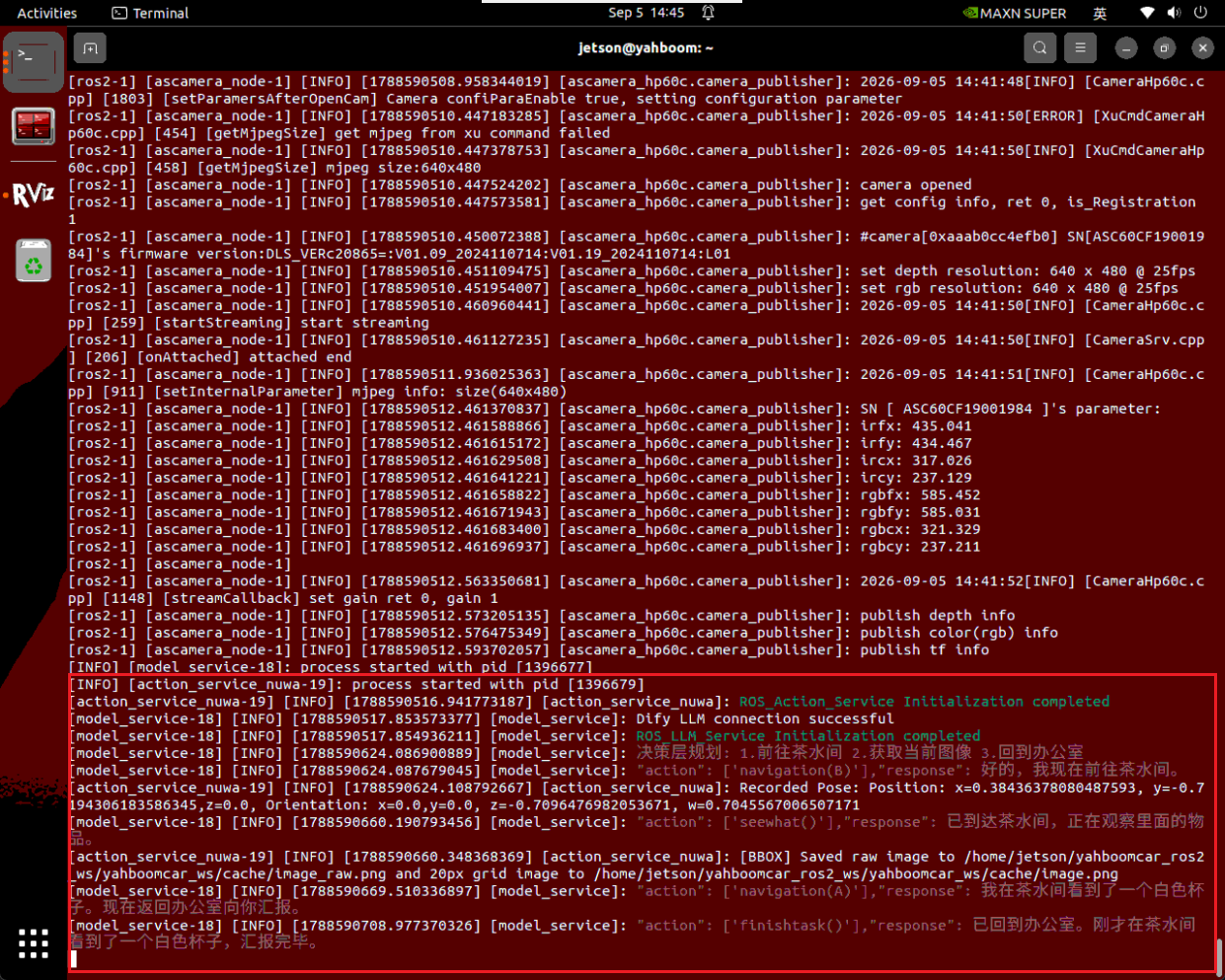
4. Core Source Code Analysis
Source code package path:
~/yahboomcar_ros2_ws/yahboomcar_ws/src/multi_brains
The system provides two independent action execution service sides for different hardware configurations (action_service_nuwa.py and action_service_usb.py), and the navigation interface is completely unified.
4.1 Semantic Point Parsing and Navigation Goal Dispatch (action_service_*.py)
In ActionController, the navigation method encapsulates the Nav2 NavigateToPose action client:
xxxxxxxxxxdef navigation(self, point_name):    # 1. Look up the pose parameters of the corresponding point in the map mapping table    target_info = self.navpose_dict.get(point_name)    if not target_info:        self.get_logger().error(f"未找到目标点位: {point_name}")        return False
    if self.first_record:        # Record the initial position before departure to facilitate returning along the original route        self._record_current_pose()        self.first_record = False
    # 2. Construct the Nav2 target pose message and send it asynchronously    goal_msg = NavigateToPose.Goal()    goal_msg.pose = target_info    send_goal_future = self.navclient.send_goal_async(goal_msg)
Asynchronous waiting and status closed loop: The
navigation()method suspends and waits for the underlying Nav2 navigation to complete. After the chassis comes to a stable stop, it feeds the status back to the large model, driving the large model to continue the subsequent photo-takingseewhat()and return tasks.
4.2 Visual Memory and Multimodal Long-Context Reasoning
In long-duration inspection tasks, the large model achieves cross-temporal state persistence through the Dify workflow's memory variable (Conversation Context):
The list of items obtained in the pantry is cached in the conversation history as state context;
When the robot returns and arrives at the office, the large model synthesizes the historical visual recognition results with the current task goal, automatically generates a summary description, and outputs it to the user through TTS voice.